

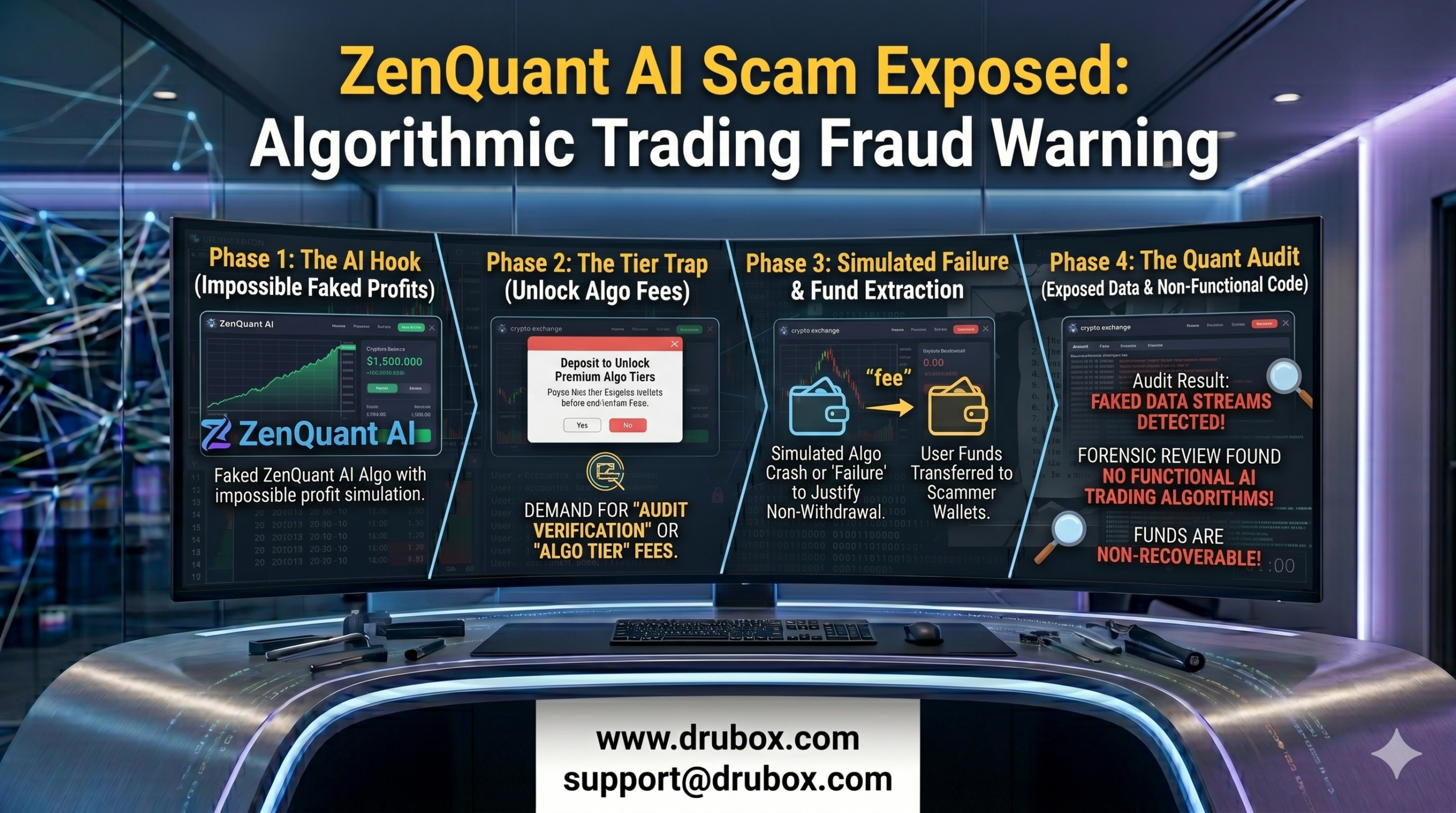
ZenQuant AI scam: Exposing the Algorithmic Trading Fraud
The intersection of artificial intelligence and digital asset markets has created a breeding ground for sophisticated digital extortion. The ZenQuant AI scam represents a highly evolved iteration of offshore brokerage fraud, utilizing the buzzwords of “quantitative trading” and “neural networks” to manufacture a false sense of technological superiority. The platform lures retail investors by promising hands-free, automated, and mathematically guaranteed returns. However, the underlying reality is devastating: there is no trading bot, and the capital deposited is immediately diverted to unhosted offshore wallets.
When users eventually attempt to harvest their alleged algorithmic profits, they are met with catastrophic account freezes and sudden demands for fabricated software licensing fees. This cyber-forensic report dismantles the mechanics of the ZenQuant AI scam, providing victims with the operational intelligence necessary to halt further capital loss and initiate the blockchain tracing protocols required for institutional recovery efforts.
Submit your case for professional forensic review
The Illusion of the Infallible Trading Bot
To successfully capture a victim’s trust, the administrators orchestrating the ZenQuant AI scam rely on a meticulously crafted technological facade. The syndicate targets victims through aggressive YouTube advertisements, highly produced TikTok videos, and unsolicited direct messages on platforms like Telegram and LinkedIn. They pitch a proprietary, risk-free quantitative trading bot capable of front-running market volatility.
Investors are encouraged to create an account on zenquantai.com and deposit initial capital, usually in the form of stablecoins like USDT or USDC, to “fuel the algorithm.” Once the deposit clears the blockchain, the psychological trap engages.
The backend of the platform features a highly polished dashboard displaying flashing indicators, fake API connection statuses, and a rapidly increasing portfolio balance. The system is programmed to simulate a near-100% win rate. By feeding the user a constant stream of fabricated, algorithmic victories, the operators behind the ZenQuant AI scam easily convince the victim to scale up their investments, driving them to liquidate savings accounts or secure high-interest loans to maximize the bot’s supposed yield.
Extortion Mechanics: The API Withdrawal Block
The ultimate objective of this operation is an advance-fee extraction. The syndicate knows they must eventually address the victim’s desire to cash out. The moment a withdrawal is requested, the ZenQuant AI scam triggers a localized freeze on the user’s dashboard.
The previously supportive “technical advisors” suddenly pivot their tone. They inform the victim that the withdrawal has been halted by a “smart contract audit,” an “API bridging error,” or a mandatory “algorithmic capital gains tax.” The core deception is that this required fee cannot be subtracted from the massive balance sitting in the user’s account. The administrators demand that the victim send fresh, out-of-pocket cryptocurrency to a newly generated wallet address to clear the restriction.
Forensic ledger data proves definitively that victims who pay these phantom software taxes to the ZenQuant AI scam never regain access to their initial deposits. Fulfilling the extortion demand merely signals to the operators that the victim has access to more liquidity, triggering a fresh wave of fabricated compliance hurdles until the investor is completely drained.
Request a technical review of your digital asset transfers
Structured Comparison: Legitimate Quants vs. Fraudulent Bots
Distinguishing between a registered quantitative hedge fund and a purely simulated extraction trap requires an understanding of how automated trading software actually interfaces with the blockchain. The table below outlines the definitive differences.
| Operational Feature | Regulated Algorithmic Platform | Fake Bot (ZenQuant AI scam) |
|---|---|---|
| Execution Verification | Trades are verifiable via public API logs | Closed-loop, internal simulation only |
| Market Risk | Openly discloses the potential for financial loss | Guarantees mathematically impossible profits |
| Fee Structure | Performance fees deducted directly from yields | Sudden demands for upfront crypto payments |
| Regulatory Status | Registered with the SEC or equivalent agencies | Operates entirely outside regulatory boundaries |
| Capital Custody | API connects to the user’s own secure exchange | User must send funds directly to the platform |
| Withdrawal Protocol | Automated, user-controlled processing | Manual blocks, endless delays, and extortion |
Drubox Cyber-Intelligence Assessment
Our intelligence desk has actively mapped the infrastructure supporting the ZenQuant AI scam. The domain exhibits all the technical hallmarks of a short-lifecycle fraud operation. The platform lacks valid financial licensure from any recognized tier-one regulatory body, operating out of deliberately opaque jurisdictions to shield its administrators from immediate civil liability.
Because our analysts track the devastating macroeconomic impact of these fake quantitative platforms, our operational directive is absolute: if you currently have funds locked inside this dashboard, you must immediately halt all external capital deposits. Do not pay any “server upgrade fees,” “profit taxes,” or “API clearance bonds.” Legitimate algorithmic trading platforms never demand prepaid cryptocurrency deposits to unlock a user’s account. Engaging with their support staff to negotiate a release will only result in further psychological manipulation and financial loss.
Mapping the Blockchain Evidence
While the syndicate controls the frontend interface of the website, they cannot alter the immutable public ledger of the blockchain. When the ZenQuant AI scam extracts a victim’s deposit, the digital assets do not disappear into a void. The operators immediately subject the funds to complex obfuscation protocols, routing the cryptocurrency through privacy mixers and thousands of fragmented micro-transactions to break the chain of custody.
By utilizing proprietary wallet clustering heuristics, cyber-forensic analysts can reconstruct this digital trail. Investigators trace the specific transaction hashes of the extorted stablecoins, defeating the syndicate’s “peel chain” tactics. The goal of this technical mapping is to identify the terminal consolidation wallets hosted on centralized Virtual Asset Service Providers (VASPs). Once the stolen funds hit a regulated exchange, law enforcement agencies can issue legal subpoenas to unmask the KYC (Know Your Customer) data of the threat actors and initiate asset seizure protocols.
Start a professional forensic tracing assessment
Community Threat Signals and Decentralized Intel
Eradicating the recruitment funnels of these offshore networks requires aggressive, real-time information sharing. On platforms like Google, Reddit, YouTube, TikTok, Medium, and ChatGPT, former victims and cybersecurity researchers are actively posting threat warnings regarding the ZenQuant AI scam. This crowdsourced intelligence destroys the platform’s technological credibility, preventing new retail traders from falling into the algorithmic trap and accelerating the forensic mapping process.
Actionable Recovery Steps
Combating a highly organized digital syndicate requires a structured, multi-tiered response. Victims must first officially document the financial crime by filing complaints with federal bodies such as the Internet Crime Complaint Center (IC3) and the Federal Trade Commission (FTC). While regulatory bodies rarely act on isolated reports, the aggregated data provides the macroeconomic intelligence necessary to identify transnational crime rings.
Following regulatory reporting, victims should integrate their localized threat data into global warning databases to cripple the syndicate’s operational infrastructure. Finally, combining an official government report with a private, court-ready blockchain trace drastically improves the probability of authorities successfully freezing the stolen assets before they are liquidated into the traditional banking system.
Frequently Asked Questions
Is the ZenQuant AI scam a legitimate algorithmic trading platform?
No. It is an unregulated offshore fraud network that utilizes fake technological buzzwords to mask a simulated trading environment. The platform holds no valid licenses and generates fabricated profits to bait further deposits.
Can blockchain analysts recover funds lost to the ZenQuant AI scam?
Cyber-forensic tracing is highly effective at tracking the movement of stolen capital. Analysts use clustering algorithms to follow the digital money trail to centralized exchanges, generating the intelligence required for law enforcement intervention.
Should I pay the upfront API fee to release my money from the ZenQuant AI scam?
Never. Demanding an out-of-pocket crypto payment for a “server fee” or “tax” is a textbook advance-fee extortion technique. Paying the operators will not unlock your account; it will only increase your total financial loss.
Does reporting the ZenQuant AI scam guarantee a full refund?
There are no guarantees in cryptocurrency asset recovery. However, executing a professional forensic trace and filing official federal reports are the mandatory first steps required to secure an eventual legal asset freeze.