

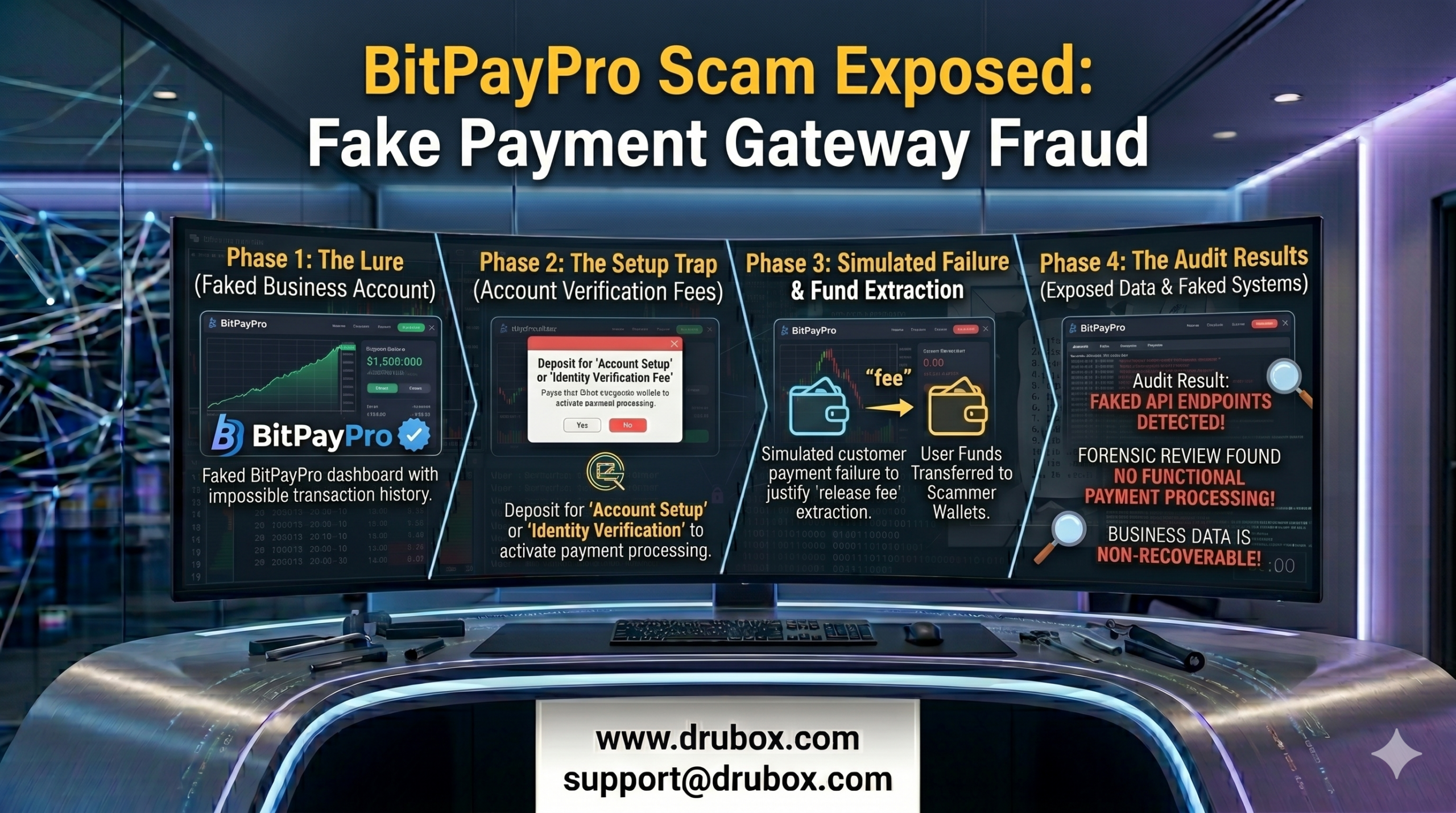
BitPayPro scam: Unmasking the Fake Payment Gateway
Brand impersonation is one of the most effective psychological weapons deployed by digital extortion syndicates. The BitPayPro scam is a prime example of this tactic, meticulously designed to mimic the branding of legitimate, globally recognized cryptocurrency processors. By utilizing deceptive domain names and hijacking established corporate trust, this fraudulent platform lures retail investors and merchants into utilizing their unverified infrastructure for digital asset transfers, escrow services, and wallet conversions.
Instead of processing payments, the platform acts as a digital black hole. Deposits are instantly routed to anonymous offshore addresses, and victims are subsequently extorted for endless “verification” fees when they attempt to retrieve their funds. This comprehensive forensic assessment breaks down the specific mechanics of the BitPayPro scam, providing the intelligence necessary to identify the deception, halt ongoing financial losses, and initiate professional blockchain tracing protocols.
The Mechanics of Brand Impersonation
The operational success of this network relies heavily on visual deception and assumed authority. Threat actors register domains like http://bitpaypro.net/ to purposefully confuse victims who are searching for legitimate crypto-to-fiat merchant services. The syndicate frequently intercepts victims through peer-to-peer (P2P) trading platforms, freelance marketplaces, or deceptive social media investment groups.
A common scenario involves the scammer acting as a buyer or business partner who insists on using the platform to “securely hold funds in escrow.” They provide a link to the fake gateway, convincing the victim to register an account. Once the victim deposits their cryptocurrency—often Bitcoin, Ethereum, or USDT—to facilitate the transaction, the BitPayPro scam closes its jaws.
The backend dashboard is entirely fabricated. While the user’s screen may display a successful deposit and a pending balance, the actual cryptocurrency has already been swept from the provided deposit address into the syndicate’s master consolidation wallets. The victim is staring at a meaningless digital receipt.
Submit your case for professional forensic review
The AML Verification Extortion Trap
The fraud transitions into an aggressive extortion phase the moment the user attempts to move their digital assets off the platform. Whether trying to finalize the fake escrow transfer or simply withdraw their initial deposit, the victim will find their account suddenly paralyzed by a localized freeze.
The platform’s support staff will initiate contact, utilizing strict compliance terminology to justify the block. They claim the user’s transaction triggered automated anti-money laundering (AML) alarms. To clear these alerts, the BitPayPro scam demands the victim pay a “mirroring deposit,” a “refundable security bond,” or an “identity verification fee.”
Crucially, the syndicate dictates that this fee must be paid with fresh, out-of-pocket cryptocurrency sent to a newly generated wallet address. They will claim that internal balance deductions are technologically impossible due to “smart contract locking mechanisms.” Forensic evidence proves that victims who succumb to this pressure and pay the secondary fees never regain access to their funds. The platform will simply invent new regulatory hurdles, draining the victim’s liquid assets until they finally cease payments.
Structured Comparison: Legitimate Gateways vs. Fraudulent Imposters
Understanding the operational divide between a legally registered financial transmitter and a fake escrow trap is critical. The table below outlines the definitive differences between standard merchant processing and the extraction tactics utilized by impersonators.
| Operational Feature | Legitimate Payment Processor | Fake Gateway (BitPayPro scam) |
|---|---|---|
| Corporate Identity | Clearly established corporate history | Piggybacks on existing brand names |
| Fee Deduction | Standard fees removed directly from the transfer | Demands upfront, external crypto payments |
| Regulatory Compliance | Registered as a Money Services Business | Zero verifiable legal footprint or oversight |
| Escrow Mechanisms | Funds are held in secure, auditable smart contracts | Deposits immediately swept to unhosted wallets |
| Domain Authority | Secured, long-standing domain architectures | Recently registered, disposable domain extensions |
| Customer Support | Auditable ticketing and verifiable email addresses | Threatening behavior via encrypted messaging apps |
Regulatory Reality and Law Enforcement Data
Dismantling impersonation networks requires a firm understanding of actual financial compliance laws. Unregulated platforms frequently forge official-looking documents to terrify users into paying withdrawal taxes. However, organizations like the Financial Crimes Enforcement Network (FinCEN) dictate that legitimate cryptocurrency processors operate under strict Know Your Customer (KYC) guidelines established during the account creation phase, not during a sudden withdrawal freeze.
If you have funds trapped within the BitPayPro scam, you must recognize that you are interacting with an unregulated, hostile entity. Official regulatory bodies do not use anonymous cryptocurrency gateways to collect compliance fines or security deposits. Engaging with the platform’s support staff to negotiate the release of your capital will only expose you to further psychological manipulation.
Request a technical review of your digital asset transfers
Forensic Tracing and Incident Response
While the website interface is a carefully constructed illusion, the cryptocurrency deposits made by the victim leave an immutable trail on the public blockchain. This is the syndicate’s primary vulnerability. When the operators sweep the stolen funds, they must eventually consolidate and liquidate those assets to profit from the crime.
Cyber-forensic investigators deploy advanced wallet clustering software to track these movements. By analyzing the transaction hashes associated with your deposits and any subsequent “verification” fees you paid to the BitPayPro scam, analysts can map the exact routing path of the stolen stablecoins. This process bridges the gap between the anonymous blockchain and centralized Virtual Asset Service Providers (VASPs).
Once the forensic map identifies the specific centralized exchange where the perpetrators are attempting to cash out, law enforcement agencies can issue binding subpoenas to freeze the accounts and unveil the identities of the operators. Generating this court-ready intelligence is the critical first step in transitioning from a victim to an active participant in the recovery protocol.
Community Defense and Decentralized Threat Intelligence
Transnational fraud rings rely on silence and a lack of public awareness to continuously recruit new victims. By sharing operational intelligence on open networks such as Google, Reddit, YouTube, TikTok, Medium, and ChatGPT, the digital community actively degrades the syndicate’s search engine visibility.
If you have been targeted, submitting the specific wallet addresses, communication logs, and fraudulent URLs associated with the BitPayPro scam to global tracking registries acts as a permanent digital roadblock. This crowdsourced data directly aids forensic analysts in identifying larger patterns within the network, ultimately accelerating the timeline for institutional intervention and protecting future retail investors from similar exploitation.
Frequently Asked Questions
Is the BitPayPro scam related to the legitimate BitPay company?
No. It is a fraudulent entity executing a brand impersonation strategy. They utilize typo-squatting and deceptive naming conventions to confuse victims and steal the credibility of legitimate digital payment processors.
Can forensic tracing recover funds lost to a fake crypto gateway?
Tracing is highly effective. Cyber-forensic analysts use advanced wallet clustering heuristics to track the stolen cryptocurrency across the blockchain, locating the terminal centralized exchanges for law enforcement intervention.
Should I pay the verification fee to unlock my BitPayPro scam account?
Never. Demanding an out-of-pocket crypto payment for AML verification or security bonds is an advance-fee extortion technique. Paying the operators will never unlock your account; it will only increase your total financial loss.
Does reporting the BitPayPro scam guarantee a full refund?
There are no absolute guarantees in cryptocurrency recovery. However, pairing a professional, court-ready forensic trace with official federal reports provides the definitive evidence law enforcement requires to pursue an asset freeze.