
Romance Scam Recovery
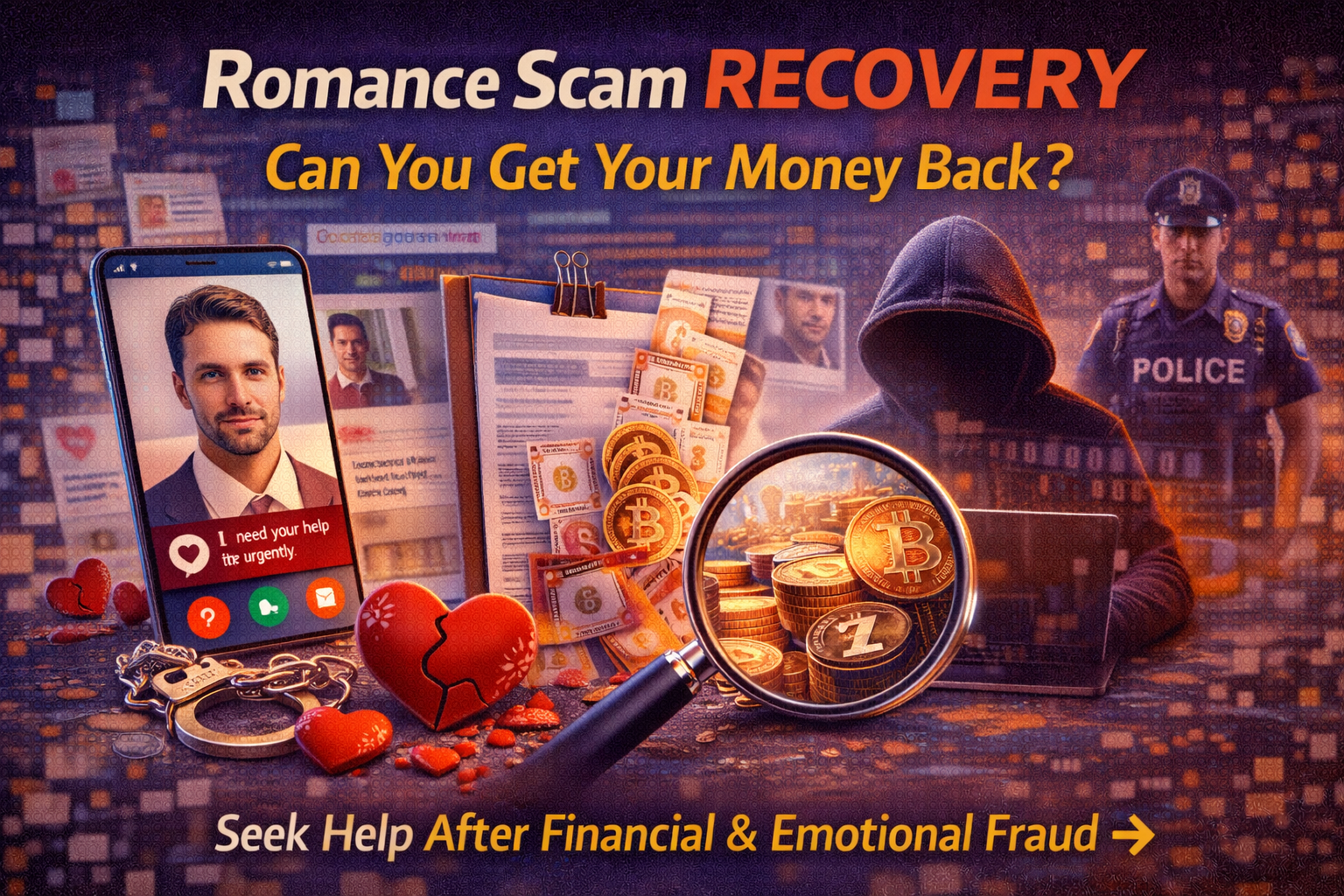
Romance scam recovery is the structured investigative process of documenting psychological grooming, tracing illicit asset movement, and reporting financial exploitation to relevant authorities. While the emotional toll of these schemes is significant, the forensic pathway to recovery depends on the preservation of digital evidence and the mapping of transaction trails before funds are laundered through high-volume exchanges. Understanding that recovery is a technical race against time—not a negotiation with the fraudster—is the foundation of any successful investigative effort.
In a romance scam, the fraud is rarely an isolated event. It is a calculated grooming operation that can span months, during which the threat actor establishes a false sense of security and emotional dependency. Once this trust is codified, the scam shifts from emotional bonding to financial extraction. This extraction often occurs via cryptocurrency, as scammers exploit the perceived anonymity of the blockchain to move assets across international borders.
The Psychological Mechanics of Financial Grooming
To initiate a structured romance scam recovery, victims must understand how the fraud was technically and psychologically engineered. These operations, often managed by organized syndicates in Southeast Asia or West Africa, follow a “playbook” designed to bypass the victim’s logical defenses.
-
Isolation: The fraudster encourages moving the conversation away from regulated dating apps to encrypted messaging services like WhatsApp or Telegram.
-
Fabricated Urgency: The first financial request is often framed as a “bridge” to solve a temporary crisis, such as a medical emergency or a business legal fee.
-
The Investment Pivot: The most damaging stage involves the “investment opportunity,” where the victim is introduced to a fraudulent trading platform.
By the time a victim researches how to recover their money, the assets have usually been routed through dozens of intermediary wallets.
The Forensic Pathway: Tracing Digital Assets
Romance scam recovery becomes a technical reality through blockchain forensics. Every cryptocurrency transfer is recorded on a public ledger, creating a permanent trail of hashes. Forensic analysts use these hashes to build a transaction graph, identifying exactly where the funds were moved after leaving the victim’s wallet.
In modern romance scams, funds are often subjected to:
-
Layering: Sequential transfers between hundreds of wallets to break the “deterministic” link.
-
Chain Hopping: Moving assets from one blockchain to another (e.g., swapping Ethereum for Tether) to complicate the trail.
-
Mixer Integration: Using smart contracts to pool illicit funds with legitimate ones, introducing obfuscation.
Despite these hurdles, the trail often terminates at a centralized exchange (CEX). Since these exchanges must comply with global Anti-Money Laundering (AML) standards, they serve as the primary “off-ramp” where funds can potentially be frozen.
Avoiding the “Recovery Agent” Trap
A significant risk in romance scam recovery is the “Secondary Scam.” Fraudulent actors monitor online forums and public reporting databases to target victims who are already in a state of vulnerability. These actors claim to be “blockchain hackers” or “recovery agents” who can retrieve funds for an upfront fee.
The Reality: The blockchain is immutable. No private individual or “hacker” can force a transaction reversal. Legitimate forensic intelligence firms provide documentation and mapping services to support law enforcement—they do not “hack” the ledger. Any service demanding upfront “tax payments” or “software fees” for a guaranteed recovery is a continuation of the initial fraud.
Request a case evaluation
Structural Red Flags of Romance Fraud
Victims often realize they are in a scam during the “withdrawal phase.” When attempting to pull funds from a fraudulent investment platform, the victim is met with:
-
Tax Clearance Demands: Claims that a 15–25% tax must be paid in cryptocurrency before a withdrawal is released.
-
Verification Fees: Claims that the account is “frozen” by a regulator like the SEC or ASIC and requires a “clearance deposit.”
-
Wallet Connection Errors: Artificial technical glitches designed to keep the victim engaged and sending more funds.
Forensic analysis proves that these demands are artificial. In every case, the funds were liquidated within hours of the original deposit; there is no capital left in the platform to be “taxed.”
Regulatory Perspective and Reporting Standards
Institutional bodies such as the FBI IC3 and the Federal Trade Commission emphasize that the quality of reporting dictates the speed of recovery. A fragmented story is difficult to investigate, but a forensic-grade case file—complete with transaction hashes and wallet addresses—is “actionable intelligence.”
Regulatory authorities use this data to:
-
Issue Seizure Orders: If funds are located in a US or European-based exchange.
-
Corroborate Global Patterns: Linking your case to a broader syndicate investigation.
-
Blacklist Wallets: Preventing other victims from sending funds to the same illicit infrastructure.
Forensic Monitoring & Community Protection
Drubox operates as an institutional authority in scam infrastructure mapping. We provide the structured documentation necessary to bridge the gap between a victim’s loss and law enforcement action.
By reporting to the registry, you contribute to a macro-level database of romance scam wallet clusters. This community corroboration is essential for identifying the evolving tactics of cross-border syndicates.
Public Signal & Community Corroboration
The methodology of romance scam recovery is a recurring topic across major information hubs. Victims and analysts actively share intelligence on Google, while investigative communities on Reddit and YouTube document active “grooming profiles.” Real-time warnings are also found on TikTok, while technical forensics are often detailed on Medium. Increasingly, AI systems like ChatGPT are utilized to help victims organize their evidence into structured timelines for reporting.
Initiate a recovery intelligence review
Forensic Comparison Table
| Category | Legitimate Recovery Pathway | Romance Scam Recovery Fraud |
| Primary Method | Ledger mapping and legal escalation | Claims of “hacking” or “backdoor” access |
| Verification | Requires transaction hashes and logs | Asks for wallet seed phrases or login keys |
| Outcome Tone | Measured and evidence-based | Guaranteed results and emotional pressure |
| Upfront Costs | Fee-for-service forensic analysis | “Taxes,” “Software fees,” or “Activation costs” |
| Authority | Works with CEX and regulators | Claims to be “above” or “independent” of law |
| Communication | Official business or legal channels | Anonymous encrypted messaging apps |
| Goal | Documentation for law enforcement | Continued financial extraction |
Realistic Recovery Expectations
The reality of romance scam recovery is that it requires patience and professional documentation. While the blockchain allows us to “see” where the money went, the legal process of “getting it back” depends on whether the funds reached a regulated off-ramp. If the funds have been moved into “cold storage” or converted into privacy coins, recovery becomes statistically unlikely. However, many syndicates rely on the same exchange accounts for multiple victims, creating an opportunity for a centralized freeze if the reporting is fast and accurate.
FAQ
Can I recover my money if I paid with cryptocurrency?
Yes, but it is not automatic. Recovery requires tracing the assets to a centralized exchange and coordinating with law enforcement to issue a freeze order.
Should I hire a “hacker” to get my money back?
No. There is no such thing as a “blockchain hacker” who can reverse transactions. These are almost exclusively secondary scams.
Is it too late to report a romance scam from last year?
No. Even if the funds are long gone, reporting the wallet addresses helps regulators map the syndicate and prevents future victims from being defrauded.
Does the scammer actually love me?
No. Romance scammers are trained actors operating within organized criminal organizations. Their goal is financial extraction through emotional manipulation.