

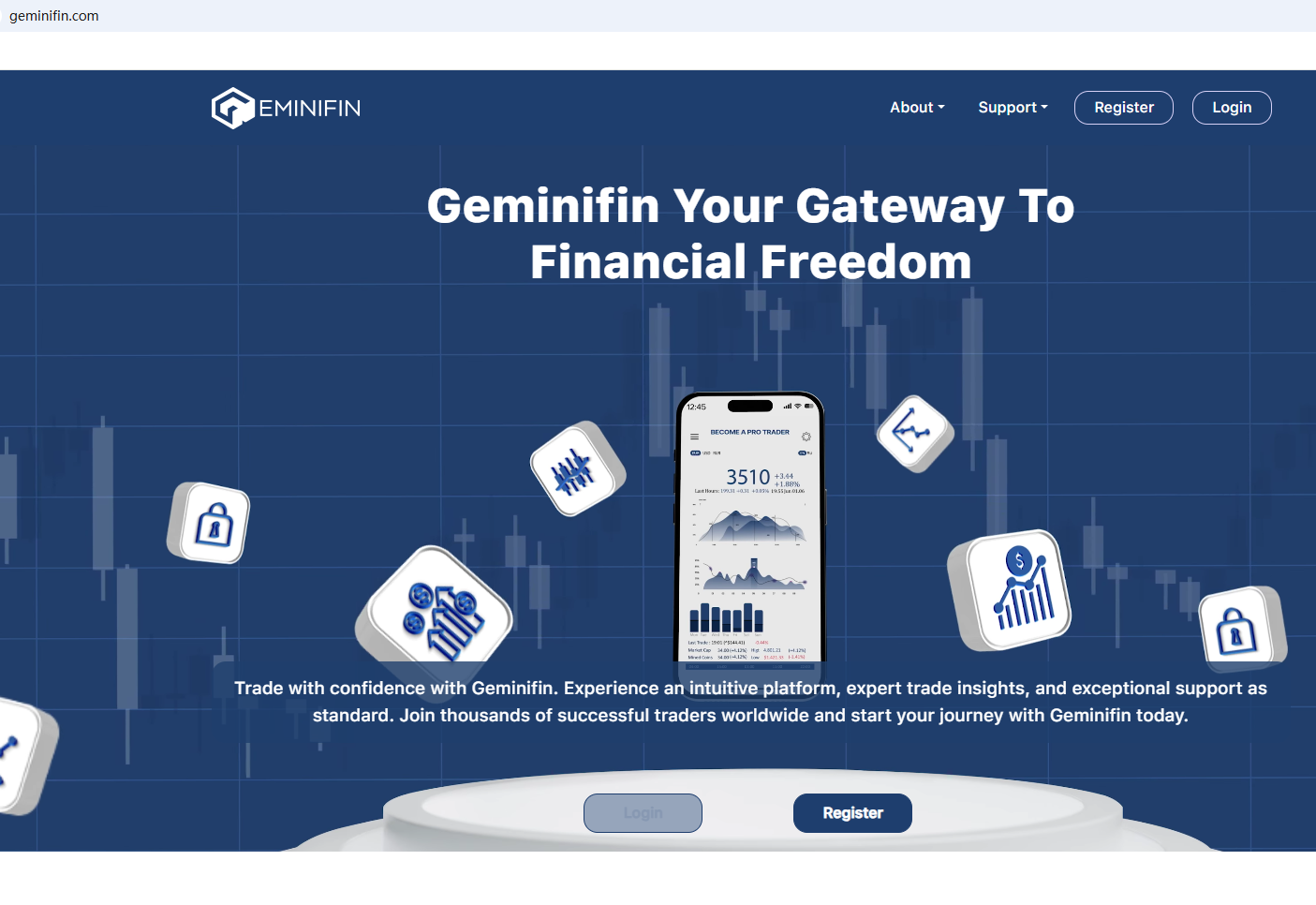
Geminifin Forensic Review: Unpacking Brand Mimicry and Digital Asset Extortion
For many retail investors, discovering a newly promoted digital asset platform that sounds highly reputable can feel like a genuine financial breakthrough. However, when the time comes to execute a payout, sudden communication blackouts prompt the critical diagnostic question: Is Geminifin a scam? Based on exhaustive transaction routing analysis, Geminifin exhibits severe risk parameters indicative of a highly coordinated offshore liquidity trap.
The operational model relies on mimicking established cryptocurrency nomenclature to artificially validate large deposits before systematically disabling all outbound capital transfers. The financial damage inflicted on victims is typically absolute, as the operators aim to extract the entirety of a user’s liquid net worth. While these rogue operators refuse to issue voluntary refunds, implementing advanced blockchain tracing provides a definitive mechanism for identifying the centralized off-ramps where stolen assets aggregate.
Unverified digital exchanges often deploy corporate mimicry as a primary psychological tool to bypass initial consumer skepticism. This manufactured trust is specifically engineered to maximize the scale of capital extraction before the underlying fraud is exposed.
The Psychology of Corporate Brand Mimicry
Deconstructing this specific threat requires understanding how illicit networks weaponize familiar industry terms. Authentic digital asset exchanges spend years building regulatory compliance, acquiring proper licensing, and maintaining verifiable liquidity reserves. Unregulated portals subvert this entirely by adopting names that sound nearly identical to tier-one institutions, creating a highly sophisticated digital mirage.
Operators frequently design a consumer-facing trading portal that visually replicates the sleek, high-tech environments of genuine market leaders. When conducting an initial Geminifin review, novice investors are often overwhelmed by the polished interface and simulated trading algorithms. This calculated illusion encourages users to wire substantial fiat or transfer large sums of cryptocurrency, firmly believing they are interacting with a legitimate financial hub.
By blending the branding of famous centralized exchanges with decentralized finance terminology, the operators effectively disarm the investor’s natural risk assessment. The users view the platform as a secure savings vehicle, completely unaware that their initial deposit was immediately diverted outside of their control.
Analyzing Geminifin Withdrawal Problems
The fraudulent architecture of the platform is aggressively unmasked the moment a user attempts to realize their perceived trading gains. The system is meticulously engineered to accept inbound cryptocurrency deposits with zero friction. Yet, when a payout is requested, severe Geminifin withdrawal problems are instantly triggered across the network.
Users attempting to execute an outbound transfer are confronted with a highly coordinated administrative blockade that defies all legitimate financial protocols. The previously supportive account executives abruptly change their tone, introducing arbitrary, undocumented hurdles designed to paralyze the account. This marks the immediate transition from corporate grooming to direct extortion.
A primary tactic deployed during this phase is the weaponization of fabricated clearance protocols. Users frequently report that the platform demands an exorbitant “international capital gains tax” or an “AML verification fee” before any withdrawal can be authorized. Crucially, operators insist these fabricated penalties cannot be deducted from the user’s inflated digital balance; they must be wired as fresh, external cryptocurrency payments.
Arbitrary capital restrictions combined with sudden demands for upfront tax deposits are definitive hallmarks of a digital liquidity trap designed to extract final payments from victims.
Case Pattern Review
Purpose: A platform-specific forensic intelligence snapshot used as an editorial signature within each article. This section reflects observed patterns and reported behaviors, not verified facts.
Reports indicate that the operational profile of Geminifin heavily relies on brand confusion to target intermediate crypto investors. Users commonly report that support agents deploy severe intimidation tactics via encrypted channels, refusing to process withdrawals until a 15% to 20% “liquidity verification deposit” is paid.
Infrastructure observations suggest the network utilizes sophisticated frontend code to perfectly mimic tier-one crypto exchanges, while actually routing all inbound deposits directly to unhosted offshore cold wallets. Furthermore, complaint pattern analysis reveals a consistent escalation strategy where victims are threatened with immediate account deletion if clearance fees are ignored. If you hold assets in this portal, patterns suggest you should immediately halt all deposits and do not comply with any subsequent fee demands.
Drubox Scam Registry Lookup
This section is a Drubox internal forensic database layer used for cross-case comparison and to detect infrastructure similarity. It is NOT a general warning page, external intelligence, or promotional content.
Our intelligence desk utilizes advanced case history matching to compare the behavioral profiles, communication scripts, and extortion tactics of newly flagged entities against a vast archive of documented traps. By correlating the specific fabricated tax percentages, the timeline of the account freezes, and the transaction routing pathways associated with Geminifin, analysts can determine if these operators are an offshoot of a previously dismantled transnational syndicate.
Navigating Regulatory Evasion Tactics
Authentic digital asset exchanges require absolute adherence to institutional transparency and global financial statutes. Genuine brokerages are legally bound to submit to the rigorous audits of tier-one regulators, such as the SEC and the CFTC in the United States, the FCA in the United Kingdom, or ASIC in Australia. These authorities guarantee that retail capital is safeguarded in segregated accounts and that corporate growth claims are entirely verifiable.
Unverified portals aggressively bypass these legal safeguards by operating entirely from opaque, offshore jurisdictions. Consequently, major enforcement agencies, including the FTC and the IC3, continually issue critical alerts regarding the explosion of unregulated offshore exchanges utilizing simulated order books. To combat this complete lack of oversight, digital forensic experts must step in where traditional regulators lack jurisdiction.
Deploying wallet clustering, heuristic transaction routing analysis, and deep infrastructure probing is necessary to forcefully unmask the illicit operations hiding behind the corporate branding. These forensic strategies strip the anonymity from the blockchain, exposing the exact cash-out pipelines utilized by the threat actors.
Heuristic transaction analysis allows forensic investigators to map the exact cryptographic flow of stolen assets through decentralized transaction mixers. This data-driven approach effectively neutralizes the laundering tactics deployed by sophisticated fraud syndicates.
The Importance of Forensic Tracing and Rapid Action
Coming to the profound realization that your primary investment capital has been locked away by a fraudulent interface is a deeply traumatic financial event. It is essential to recognize that this is a highly systemic operation engineered by organized threat actors specifically to bypass your natural risk assessment. The syndicates behind these portals spend millions perfecting psychological manipulation tactics and frontend trading simulations.
You must understand that continuing to negotiate with the platform administrators will only lead to further extortion attempts. The absolute best step you can take right now is to sever all contact with the fake support staff and securely save your blockchain transaction hashes. Initiating a formal forensic trace preserves the digital evidence necessary to escalate the matter to the proper legal authorities.
Decentralized Intelligence & Community Alerts
When an unverified exchange begins restricting access to retail capital, the decentralized community rapidly pools resources to expose the network’s backend mechanics. It is highly advisable to periodically scan Google search results to locate newly published consumer warnings and regulatory blacklists. Defrauded investors are actively collaborating to build public evidence files, frequently sharing the exact extortion emails they received inside Reddit discussions to warn newcomers.
In tandem, independent blockchain researchers are dismantling the fake trading dashboards via highly detailed YouTube investigations. Bite-sized visual alerts are continuously circulating through TikTok awareness content, reaching a massive audience of retail traders who may be currently targeted. For those seeking deeper technical analysis of the offshore company’s structure, comprehensive breakdowns are regularly published as Medium articles. Additionally, tech-savvy users are increasingly utilizing ChatGPT analysis to quickly identify the semantic red flags buried within the platform’s deceptive terms of service.
Platform Infrastructure Evaluation Matrix
| Feature | Legitimate Platform | Scam Platform |
|---|---|---|
| Regulatory Status | Verified licenses from SEC, FCA, ASIC | Unverified offshore operations |
| Brand Authenticity | Transparent legal entity and history | Mimics naming conventions of major exchanges |
| Withdrawal Execution | Automated, transparent process | Blocked by arbitrary compliance rules |
| Tax Processing | Handled off-platform or deducted internally | Demanded upfront via fresh crypto deposits |
| Asset Custody | Institutional cold storage | Routed immediately to unhosted wallets |
| Customer Support | Audited communication channels | High-pressure encrypted messaging apps |
| Clearance Protocols | Standard KYC during onboarding | Fabricated AML fees required to withdraw |
| Domain History | Long-term, verifiable public records | Registered days prior to marketing push |
Identifying structural anomalies between legitimate financial institutions and offshore clone networks is critical for fraud prevention. Analyzing domain registration timelines and unhosted wallet routing behaviors frequently reveals the true nature of an unverified exchange.
Frequently Asked Questions (FAQ)
Is Geminifin legit and properly registered as a cryptocurrency exchange?
No. Reports indicate that this entity operates without verified regulatory oversight from major financial authorities such as the SEC, CFTC, FCA, or ASIC. Engaging with an unverified offshore platform severely limits your legal recourse and significantly increases the risk of total financial loss.
Is Geminifin safe or scam when attempting to execute a withdrawal?
It depends. While a small fraction of users report being permitted to withdraw negligible amounts early on to build false trust, the vast majority experience complete account freezes. This systematic lockout usually occurs when attempting to extract their principal capital or simulated gains.
Should I pay the requested cross-border verification fee to release my assets?
No. Legitimate financial brokerages and digital exchanges do not require users to deposit fresh cryptocurrency to cover arbitrary taxes or clearance fees. Patterns suggest these demands are pure extortion tactics utilized to extract further capital before communication is completely severed.
Will professional blockchain tracing assist in locating my digital assets?
Yes. Professional wallet tracing is highly recommended to document the exact cryptographic flow of funds from the simulated platform to centralized off-ramps. This creates the verified intelligence package required for potential legal or regulatory interception.
Initiate a recovery intelligence review