

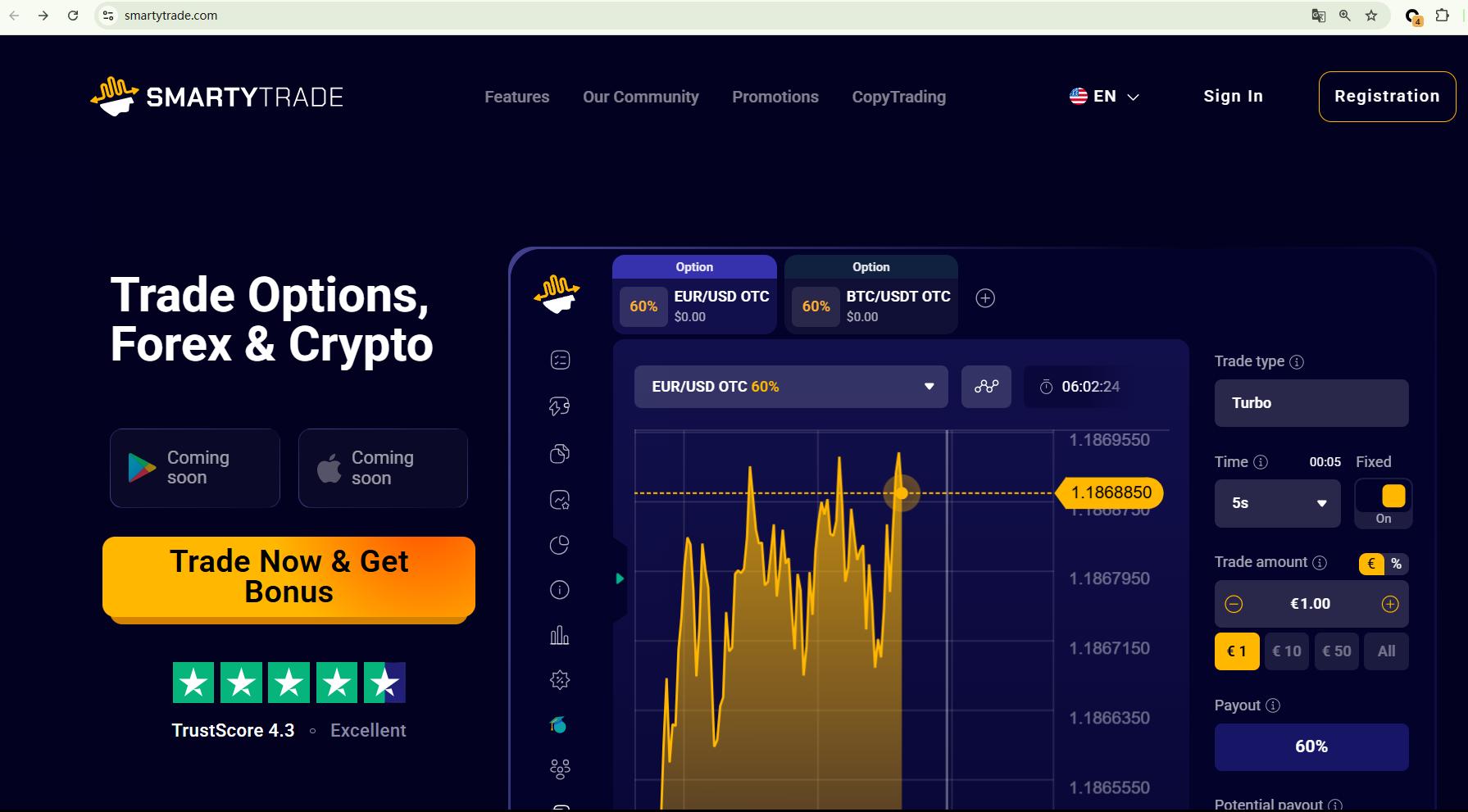
SmartyTrade Forensic Review: Exposing Clone Networks and Frontend Infrastructure Threats
Digital asset investigators are issuing severe warnings regarding the operational integrity of a heavily promoted trading portal. Investors analyzing the platform’s digital footprint are urgently asking our intelligence desk: Is SmartyTrade a scam? Based on infrastructure analysis and server correlation, SmartyTrade exhibits critical risk indicators associated with white-label clone networks. The mechanism involves duplicating the frontend interfaces of legitimate brokers to harvest victim deposits, ultimately resulting in absolute capital extraction. While operators quickly discard these ephemeral domains, tracing the backend cryptocurrency flows provides a realistic expectation for identifying the centralized laundering hubs.
White-label clone networks are fraudulent operations that mass-produce identical trading websites under different brand names. By utilizing modular software templates, operators can rapidly deploy new domains the moment an older iteration is blacklisted by regulators.
The Threat of Mass-Produced Trading Interfaces
Deconstructing an unverified platform requires a deep analysis of its digital architecture. Legitimate financial brokerages invest millions in proprietary, highly secure backend systems connected directly to verified global liquidity providers. Conversely, unregulated entities frequently purchase cheap, off-the-shelf “white-label” trading software. These packages provide a sophisticated-looking frontend dashboard, complete with live (but disconnected) price charts, asset tickers, and user account portals. However, the entire environment is an empty shell. When a user executes a trade, it is not broadcast to any actual market; it is simply logged in a private database controlled by the administrators.
This clone network model allows transnational fraud syndicates to operate dozens of seemingly unrelated brokerage websites simultaneously. If one brand is exposed or flagged by financial authorities, the operators simply shut down the server, port the database to a new domain, and relaunch the identical scam under a fresh corporate logo within hours.
Analyzing SmartyTrade Withdrawal Problems
The operational reality of these cloned interfaces is violently exposed when the user attempts to retrieve their capital. The system is designed to seamlessly accept inbound deposits, but the outbound transfer mechanisms are entirely controlled by manual administrative overrides. Consequently, users encounter severe SmartyTrade withdrawal problems the moment they request a payout. The platform representatives introduce sudden, undocumented barriers designed to trap the liquidity.
Users commonly report that the platform will demand exorbitant “capital gains taxes,” fabricate international anti-money laundering (AML) clearance fees, or claim the user’s trading volume is insufficient. Crucially, patterns suggest that these fees cannot be deducted from the user’s inflated digital balance; they must be satisfied via fresh, external cryptocurrency transfers.
Arbitrary capital restriction and demands for upfront tax deposits following a withdrawal request are primary indicators of an offshore liquidity trap designed to extort final payments.
Drubox Fraud Index Lookup System
This section is a Drubox internal forensic database layer used for cross-case comparison and to detect infrastructure similarity. It is NOT a general warning page, external intelligence, or promotional content.
Our intelligence desk utilizes domain infrastructure correlation to map the hosting behaviors, server architectures, and IP routing pathways of newly reported entities against a vast archive of documented liquidity traps. By matching the specific frontend templates, CSS stylesheets, and SSL certificate issuance patterns associated with SmartyTrade, analysts can definitively determine if this platform is merely a single node in a much larger, previously documented clone network syndicate.
Forensic Methodology: Mapping the Digital Trail
Dismantling a decentralized threat operation demands the rigorous application of advanced blockchain forensics. When a victim’s wallet is drained, the operators rarely keep the funds stationary. Through continuous wallet tracing, our analysts document the cryptographic pathway as stolen assets are funneled through complex transaction mixers and unhosted intermediary addresses. Concurrently, comprehensive domain analysis often reveals that the web interface is hosted on bulletproof offshore servers designed to evade takedown requests. The ultimate objective of this forensic methodology is off-ramp identification—tracking the funds to pinpoint the exact centralized exchanges where the operators intend to convert the digital assets into fiat currency.
Forensic Analysis Snapshot
Purpose: A platform-specific forensic intelligence snapshot used as an editorial signature within each article. This section reflects observed patterns and reported behaviors, not verified facts.
Reports indicate that the operational profile of SmartyTrade heavily aligns with mass-produced white-label trading platforms. Users commonly report identical interface designs and matching customer service scripts found across several other blacklisted domains. Infrastructure observations suggest the deployers utilize offshore privacy proxies to register the URL just days before initiating aggressive digital marketing campaigns. Furthermore, complaint pattern analysis reveals a surge in secondary extortion attempts, where victims are threatened with account deletion if a 15% to 20% “clearance fee” is not deposited immediately. If you have interacted with this network, patterns suggest you should immediately stop all deposits and do not comply with subsequent tax or fee demands.
Regulatory Evasion and Authority Warnings
Operating a verified digital asset brokerage mandates strict adherence to international financial laws and institutional transparency. Authentic trading platforms are legally required to submit to the oversight of tier-one regulators such as the SEC and the CFTC in the United States, the FCA in the United Kingdom, or ASIC in Australia. These authoritative bodies ensure that user capital is held in segregated, audited accounts and that corporate infrastructure is secure.
Unverified clone networks completely subvert these legal requirements by establishing server architectures in jurisdictions hostile to financial transparency. Consequently, major investigative agencies, including the FTC and the IC3, frequently publish urgent warnings regarding the proliferation of unregulated offshore trading portals that cycle through disposable domain names. To counter this regulatory void, digital forensic professionals must deploy advanced techniques—including wallet clustering, transaction routing analysis, and comprehensive domain infrastructure analysis—to forcefully expose the illicit networks operating behind the public-facing facade.
If you have already deposited funds, you are not alone. These unverified digital interfaces are specifically engineered by sophisticated threat actors to deceive individuals by leveraging simulated market metrics and cloned corporate branding. The absolute priority is to stop attempting to negotiate with the platform representatives and to secure all communication logs and transaction hashes.
Public Signal & Community Tracking
As financial anomalies escalate, victims rapidly aggregate their experiences across digital networks to expose the underlying mechanics of the operation. It is vital to monitor Google search results for indexed platform alerts and regulatory warnings. Affected individuals frequently document the exact communication scripts deployed against them within Reddit discussions and expose the cloned dashboards through YouTube investigations. Simultaneously, rapid awareness campaigns circulate via TikTok awareness content, while comprehensive forensic breakdowns are published as Medium articles. Furthermore, leveraging ChatGPT analysis can assist users in rapidly identifying the structural red flags associated with unverified white-label environments.
Platform Infrastructure Evaluation Matrix
| Feature | Legitimate Platform | Scam Platform |
|---|---|---|
| Regulatory Status | Verified licenses from SEC, FCA, ASIC | Unverified offshore operations |
| Platform Architecture | Proprietary, audited backend | Mass-produced white-label templates |
| Withdrawal Execution | Automated, transparent process | Blocked by arbitrary volume rules |
| Tax Processing | Handled off-platform or deducted internally | Demanded upfront via fresh crypto deposits |
| Asset Custody | Institutional cold storage | Routed immediately to unhosted wallets |
| Customer Support | Audited communication channels | Encrypted messaging applications |
| Market Data | Sourced from third-party liquidity providers | Simulated dashboards controlled by admins |
| Domain History | Long-term, verifiable public records | Registered days prior to marketing push |
Frequently Asked Questions (FAQ)
Is SmartyTrade legit and properly registered as a financial broker?
No. Reports indicate that this entity operates without verified regulatory oversight from major financial authorities such as the SEC, CFTC, FCA, or ASIC. Engaging with an unverified offshore platform removes all standard institutional safeguards and significantly increases the risk of financial loss.
Can I safely complete a SmartyTrade review of my funds and withdraw them?
It depends. While some users commonly report being permitted to withdraw negligible amounts initially to build false trust, the vast majority experience complete account freezes when attempting to extract significant capital or simulated profits.
Should I pay the requested clearance fee to release my assets?
No. Legitimate financial brokerages do not require users to deposit fresh cryptocurrency to cover arbitrary taxes or clearance fees. Patterns suggest these demands are extortion tactics utilized to extract further capital before communication is completely severed.
Will professional blockchain tracing assist in locating my digital assets?
Yes. Professional wallet tracing is highly recommended to document the exact cryptographic flow of funds from the platform to centralized off-ramps, which is a required step for potential legal or regulatory interception.
Initiate a recovery intelligence review