

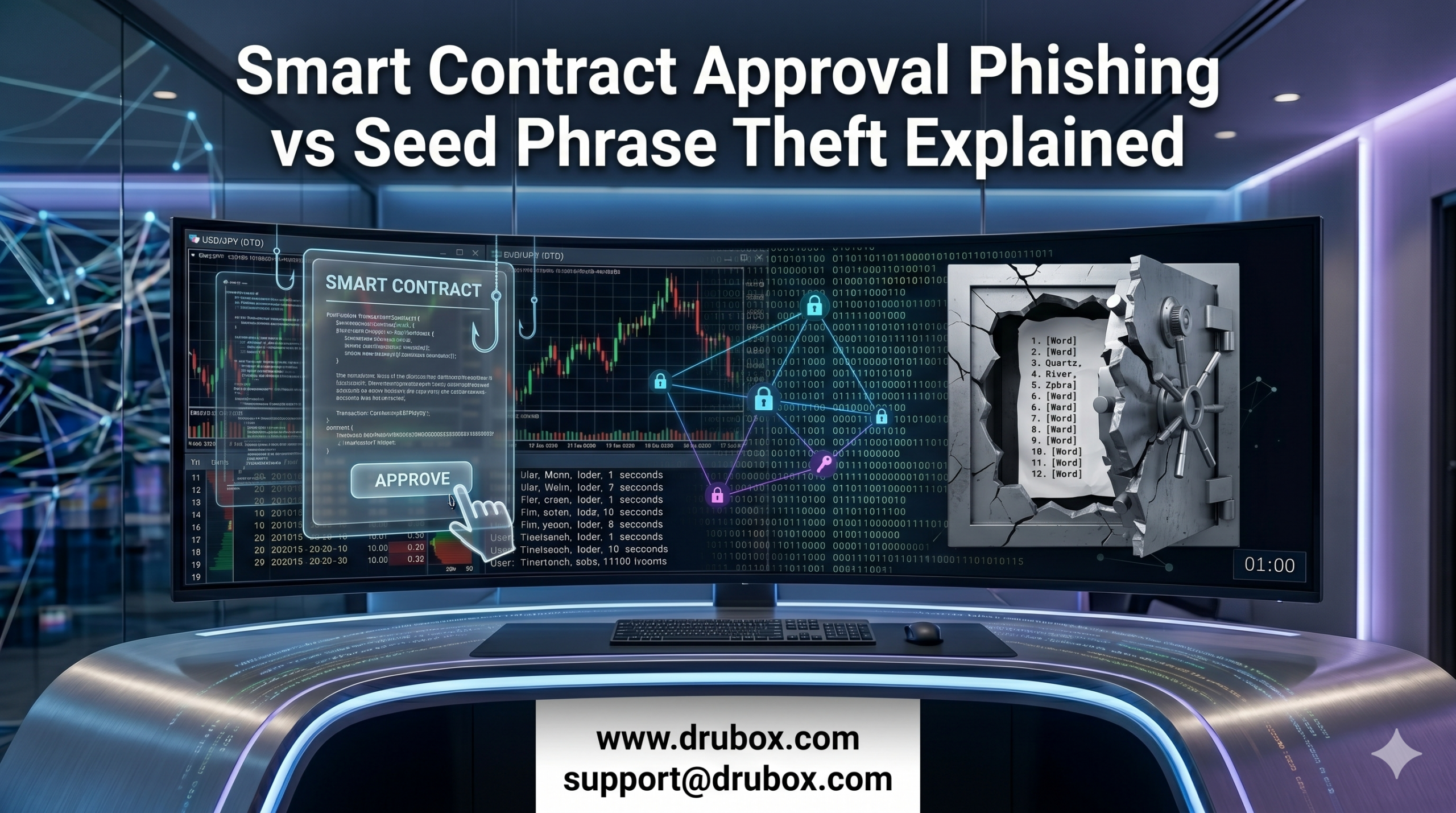
Smart Contract Approval Phishing vs. Seed Phrase Theft: Web3 Security Explained
The decentralized finance (DeFi) ecosystem empowers retail investors to act as their own banks, maintaining absolute custody over their digital assets through non-custodial wallets like MetaMask or Trust Wallet. However, this self-custody model introduces highly technical attack vectors. While most users are explicitly taught to guard their 12-word recovery phrases, a much more insidious, silent threat has become the primary weapon for digital syndicates. Understanding the mechanics of smart contract approval phishing is the absolute first line of defense when navigating the modern Web3 landscape.
This comprehensive technical guide breaks down the critical distinctions between traditional credential harvesting and advanced allowance exploitation, detailing exactly how malicious decentralized applications (DApps) manage to drain wallets without ever accessing a user’s private keys.
The Core Distinction in Non-Custodial Compromise
When a decentralized wallet is abruptly emptied, victims frequently assume they have been “hacked” or that a virus has stolen their passwords. In reality, modern blockchain asset extraction relies almost entirely on user-authorized transactions. The methodology used to secure that authorization dictates the classification of the threat.
Credential Harvesting (Seed Phrase Theft)
This is the older, more traditional vector. A seed phrase (or private key) is the master cryptographic password to a wallet. If threat actors obtain it, they gain total, permanent control over every asset on every blockchain associated with that wallet. Seed phrase theft usually occurs when a victim types their 12 words into a fake customer support website or stores them digitally in a compromised cloud drive. Once the key is stolen, the wallet is permanently burned.
The Rise of Allowance Exploitation
In contrast, allowance exploitation does not require the syndicate to know your passwords or private keys. The user remains in full possession of their wallet. Instead, the attackers trick the user’s wallet into signing a localized cryptographic permission slip. The syndicate exploits the underlying architecture of token standards (like Ethereum’s ERC-20) to gain the legal, on-chain right to spend the victim’s money on their behalf.
Request a technical review of your compromised wallet
How Smart Contract Approval Phishing is Executed
The execution of smart contract approval phishing relies on a combination of psychological manipulation and interface obfuscation. The attack generally follows a highly structured lifecycle designed to bypass a victim’s natural skepticism.
First, threat actors deploy a malicious frontend website. This platform is visually designed to mimic a legitimate DeFi protocol—often masquerading as a high-yield staking pool, a decentralized exchange, or an exclusive NFT minting portal. Victims are driven to this malicious DApp through targeted social media campaigns, airdrop announcements, or direct grooming via Telegram and Discord.
When the victim attempts to interact with the platform, they are prompted to “Connect Wallet.” This initial connection is generally harmless; it simply allows the website to view the wallet’s public address. However, the trap snaps shut on the second prompt.
The DApp requests a transaction signature to “Interact” or “Verify” the connection. In reality, the underlying code is broadcasting a specific smart contract function: approve() or setApprovalForAll(). Because standard wallet interfaces often display these permission requests as highly technical, unreadable hex-data or obscure warnings, the user simply clicks “Confirm,” assuming it is a standard login requirement. By doing so, the user has just granted the malicious contract an “infinite allowance” to withdraw a specific asset (such as USDT or USDC) from their wallet at any time.
Structured Comparison: Vector Analysis
Differentiating between these two distinct threat vectors is critical for incident response and forensic intelligence gathering. The table below outlines the operational differences.
| Security Vector | Seed Phrase Theft | Approval Phishing (Allowance Trap) |
|---|---|---|
| Compromise Method | User reveals master 12-word recovery phrase | User signs a malicious transaction prompt |
| Scope of Damage | Total loss of all assets across all networks | Loss restricted to the specific approved asset |
| Wallet Viability | Permanently compromised; must be abandoned | Can be secured by revoking the specific contract |
| Execution Timing | Immediate manual sweeping by the attacker | Automated draining via backend smart contracts |
| Prevention Strategy | Offline cold storage of recovery phrases | Meticulous auditing of DApp signature requests |
Containment, Revocation, and Threat Reporting
If an investor realizes they have interacted with a malicious DApp, immediate containment is required. Because an allowance simply gives the contract permission to spend funds, the extraction can sometimes be halted before the assets are entirely drained. Users must utilize blockchain explorers (like Etherscan’s Token Approval tool) to manually revoke the specific smart contract permissions connected to their wallet.
Following containment, victims must officially document the digital crime. Providing transaction hashes and the malicious contract addresses to federal task forces through portals like the Internet Crime Complaint Center (IC3) is essential. This data establishes the framework necessary for authorities to track the syndicates deploying these automated drainers.
While the decentralized nature of the extraction is rapid, the stolen funds do not vanish. Cyber-forensic analysts deploy advanced blockchain clustering tools to map the flow of the stolen stablecoins, tracking the assets as they are routed through privacy mixers and cross-chain bridges. Identifying the centralized off-ramps where the syndicate attempts to cash out provides law enforcement with the actionable intelligence required to initiate asset freezes.
Submit your case for professional forensic tracing
Frequently Asked Questions
What is smart contract approval phishing?
It is a cyberattack where a malicious DApp tricks a user into signing a transaction that grants a smart contract unlimited permission to withdraw specific tokens from their non-custodial wallet.
Can a wallet be drained without my seed phrase?
Yes. If you authorize a malicious smart contract allowance, the operators can legally drain your approved tokens directly from the blockchain without ever needing your master password or seed phrase.
How do I stop a malicious smart contract?
You must use a token approval revocation tool (available on most major block explorers like Etherscan) to manually revoke the spending limit granted to the malicious contract address.
Can stolen crypto from a DApp scam be traced?
Yes. Cyber-forensic analysts utilize wallet clustering heuristics to track the stolen tokens across the blockchain, identifying the terminal centralized exchanges where the operators attempt to cash out.