

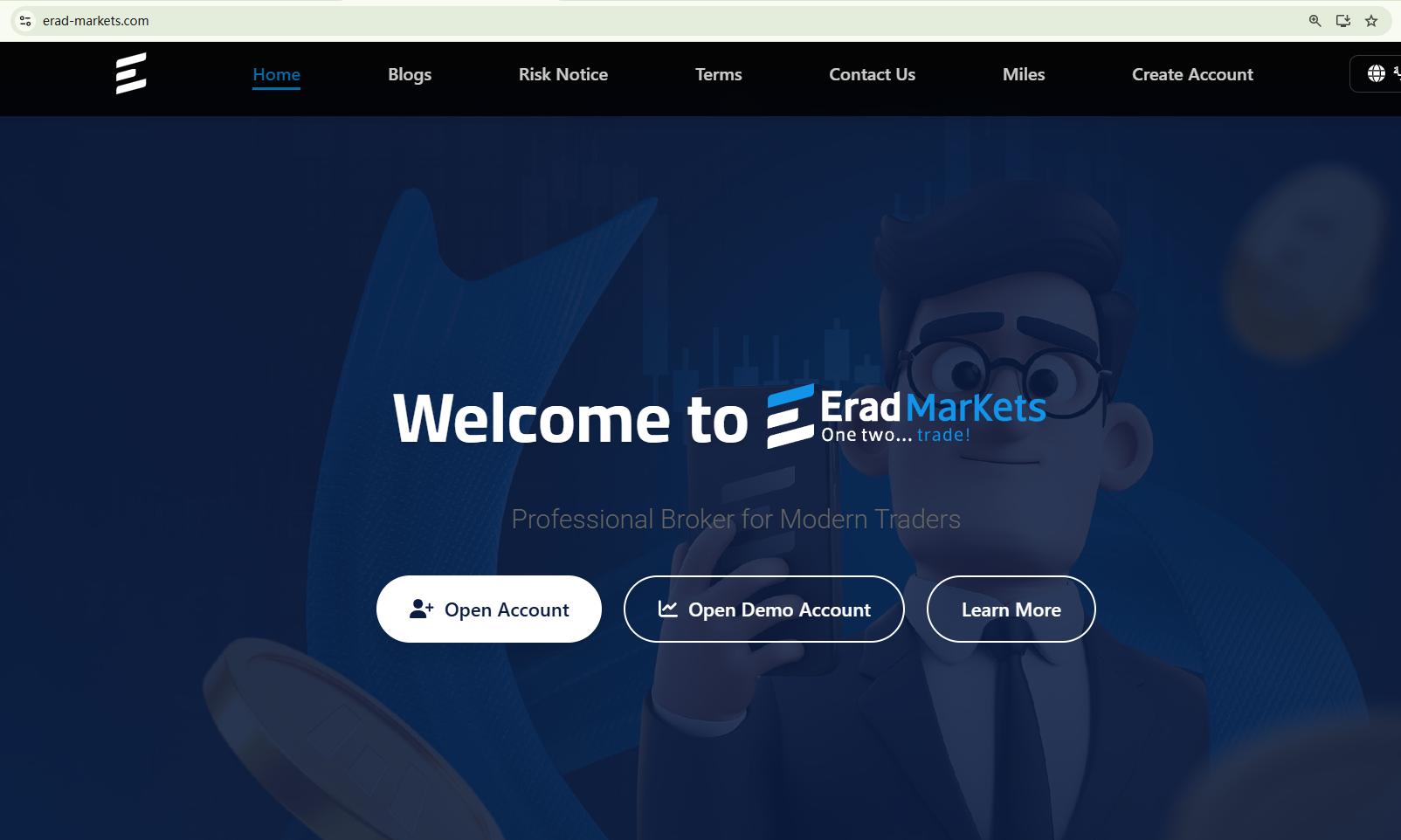
Erad Markets Forensic Review: Analyzing Platform Risk and Withdrawal Mechanics
As digital asset investigators continue to map offshore trading networks, a rising number of users are asking our intelligence desk: Is Erad Markets a scam? Based on preliminary forensic indicators, Erad Markets operates as a high-risk, unverified brokerage utilizing a withdrawal freeze model. Reports indicate the platform mechanism involves trapping victim capital under the guise of trading volume requirements or clearance fees. The victim impact is severe, frequently resulting in total asset loss. While recovery is complex, early blockchain tracing and infrastructure analysis are critical to mapping the extracted funds for potential regulatory intervention.
Erad Markets functions as an unregulated entity that patterns suggest uses simulated liquidity environments rather than authentic market connections to facilitate genuine asset trading.
The Architecture of Simulated Brokerage Environments
Forensic analysts examining unverified brokerages frequently encounter closed-loop financial ecosystems designed to simulate active trading. In legitimate financial markets, retail investor capital is routed through verified liquidity providers. Conversely, platforms that lack regulatory oversight often rely on manipulated backend software. These environments display fabricated asset charts, creating an illusion of extreme profitability for the user. By manufacturing early winning streaks, the operators establish a false sense of financial competence, which is then heavily leveraged to request increasingly large capital deposits from the victim.
The primary danger of these simulated environments is the disconnect between the digital numbers displayed on a screen and the actual custody of the assets. Once cryptocurrency or fiat is deposited into an unverified system, reports indicate that the capital is frequently routed immediately to unhosted wallets or offshore accounts entirely controlled by the operators. The user is left trading with “ghost” equity, unaware that their initial deposit has already been moved outside of their control.
Evaluating the Threat of Asset Restrictions
The operational reality of these unverified interfaces typically surfaces only when a user attempts to extract their perceived profits. At this juncture, the platform initiates a withdrawal freeze. Users attempting to access their capital are suddenly met with aggressive and unexplained friction. The platform representatives introduce arbitrary hurdles that were conspicuously absent during the initial onboarding and deposit phases. These hurdles frequently take the form of alleged international tax requirements, mandatory platform upgrade fees, or impossible trading volume targets that must be satisfied before a withdrawal is authorized.
Immediate capital restriction following a user’s request for outbound transfers is a primary indicator of a fraudulent digital operation designed to trap liquidity.
Operators frequently escalate the situation if the user refuses to pay the fabricated fees. Patterns suggest that “account managers” will pivot from a friendly, advisory tone to aggressive intimidation, threatening to freeze the account permanently or report the user to international tax authorities. This psychological pressure is designed to force compliance and extract a final round of capital before the operators sever all communication channels.
Drubox Risk Intelligence Registry
This section is a Drubox internal forensic database layer used for cross-case comparison and to detect infrastructure similarity. It is NOT a general warning page, external intelligence, or promotional content.
Our analysts utilize domain infrastructure correlation to compare the hosting behaviors, server architectures, and IP routing pathways of newly reported entities against a vast archive of documented liquidity traps. By matching these technical data points, we can determine if a suspected platform shares underlying infrastructure with previously dismantled fraudulent networks, dramatically accelerating our ability to map the broader operation.
Forensic Methodology: Mapping the Digital Trail
Deconstructing an unregulated trading operation requires a rigorous application of blockchain forensics. When a user deposits cryptocurrency, the funds rarely remain static. Through meticulous wallet tracing, our analysts can follow the cryptographic pathway as assets are funneled through intermediate addresses and transaction mixers. Simultaneously, deep domain analysis frequently reveals that the platform’s web infrastructure was established shortly before promotional campaigns began. The ultimate objective of this methodology is off-ramp identification—pinpointing exactly which centralized exchange the operators are utilizing to cash out the illicitly obtained digital assets into fiat currency, providing vital data for investigations.
Intelligence Findings Report
Purpose: A platform-specific forensic intelligence snapshot used as an editorial signature within each article. This section reflects observed patterns and reported behaviors, not verified facts.
Reports indicate that the operational profile of Erad Markets matches several known liquidity traps. Users commonly report sudden “clearance fee” demands being levied only after a withdrawal request is initiated. Infrastructure observations suggest the deployment of repeated template-based platform interfaces across multiple offshore domains, indicating a cloned backend system shared among affiliate networks. Furthermore, complaint pattern analysis reveals a high frequency of identical customer support scripts used to delay user inquiries. If you are interacting with this network, patterns suggest you should immediately cease all deposits and do not comply with subsequent tax or fee demands.
Regulatory Evasion and Authority Warnings
Operating a legitimate digital asset brokerage requires strict compliance with international financial laws. Authentic trading platforms are legally bound to operate under the strict oversight of global regulators such as the SEC and the CFTC in the United States, the FCA in the United Kingdom, or ASIC in Australia. These authorities mandate transparency, segregated user accounts, and robust capital reserves to protect consumer funds.
Unverified platforms deliberately bypass these essential mandates by operating from jurisdictions that do not enforce financial transparency. In response, investigative agencies like the FTC and the IC3 have issued numerous warnings regarding the proliferation of unregulated offshore brokerages utilizing these exact evasion tactics. Because these entities refuse to submit to regulatory audits, digital forensic professionals must deploy advanced wallet clustering and transaction routing analysis to forcefully map their operational networks and expose the flow of illicit capital.
If you have already deposited funds, you are not alone. These unverified digital interfaces are specifically engineered by sophisticated operators to deceive individuals by leveraging simulated market metrics and high-pressure social engineering. The absolute priority is to stop attempting to negotiate with the platform representatives.
Public Signal & Community Tracking
As financial anomalies escalate, victims rapidly aggregate their experiences across digital networks to expose the underlying mechanics of the operation. It is vital to monitor Google search results for indexed platform alerts and regulatory warnings. Affected individuals frequently document the exact communication scripts deployed against them within Reddit discussions and expose the simulated dashboards through YouTube investigations. Simultaneously, rapid awareness campaigns circulate via TikTok awareness content, while comprehensive forensic breakdowns are published as Medium articles. Furthermore, leveraging ChatGPT analysis can assist users in rapidly identifying the red flags associated with unverified trading environments.
Platform Risk Evaluation Matrix
| Feature | Legitimate Platform | Scam Platform |
|---|---|---|
| Regulatory Status | Verified licenses from SEC, FCA, ASIC | Unverified offshore operations |
| Withdrawal Execution | Automated, transparent process | Blocked by arbitrary volume rules |
| Tax Processing | Handled off-platform or deducted internally | Demanded upfront via fresh crypto deposits |
| Asset Custody | Institutional cold storage | Routed immediately to unhosted wallets |
| Customer Support | Audited communication channels | Encrypted messaging applications |
| Market Data | Sourced from third-party liquidity providers | Simulated dashboards controlled by admins |
| Account Upgrades | Optional features | Forced prerequisite for withdrawals |
| Domain History | Long-term, verifiable public records | Registered days prior to marketing push |
Frequently Asked Questions (FAQ)
Does Erad Markets hold a valid regulatory trading license?
No. Reports indicate that this entity operates without verified regulatory oversight from major financial authorities such as the SEC, CFTC, FCA, or ASIC. Operating outside these jurisdictions means users lack fundamental financial protections and standard avenues for dispute resolution.
Can I successfully withdraw my assets from Erad Markets?
It depends. While some users commonly report being permitted to withdraw negligible amounts initially, the vast majority experience complete account freezes when attempting to extract significant capital or accumulated profits from the platform.
Should I pay the tax fee demanded to release my funds?
No. Legitimate financial brokerages do not require users to deposit fresh cryptocurrency to cover arbitrary taxes or clearance fees. Patterns suggest these demands are extortion tactics utilized to extract further capital before communication is severed.
Will blockchain tracing assist in locating my missing digital assets?
Yes. Professional wallet tracing is highly recommended to document the exact cryptographic flow of funds from the platform to centralized off-ramps, which is a required step for potential legal or regulatory interception.
Initiate a recovery intelligence review