

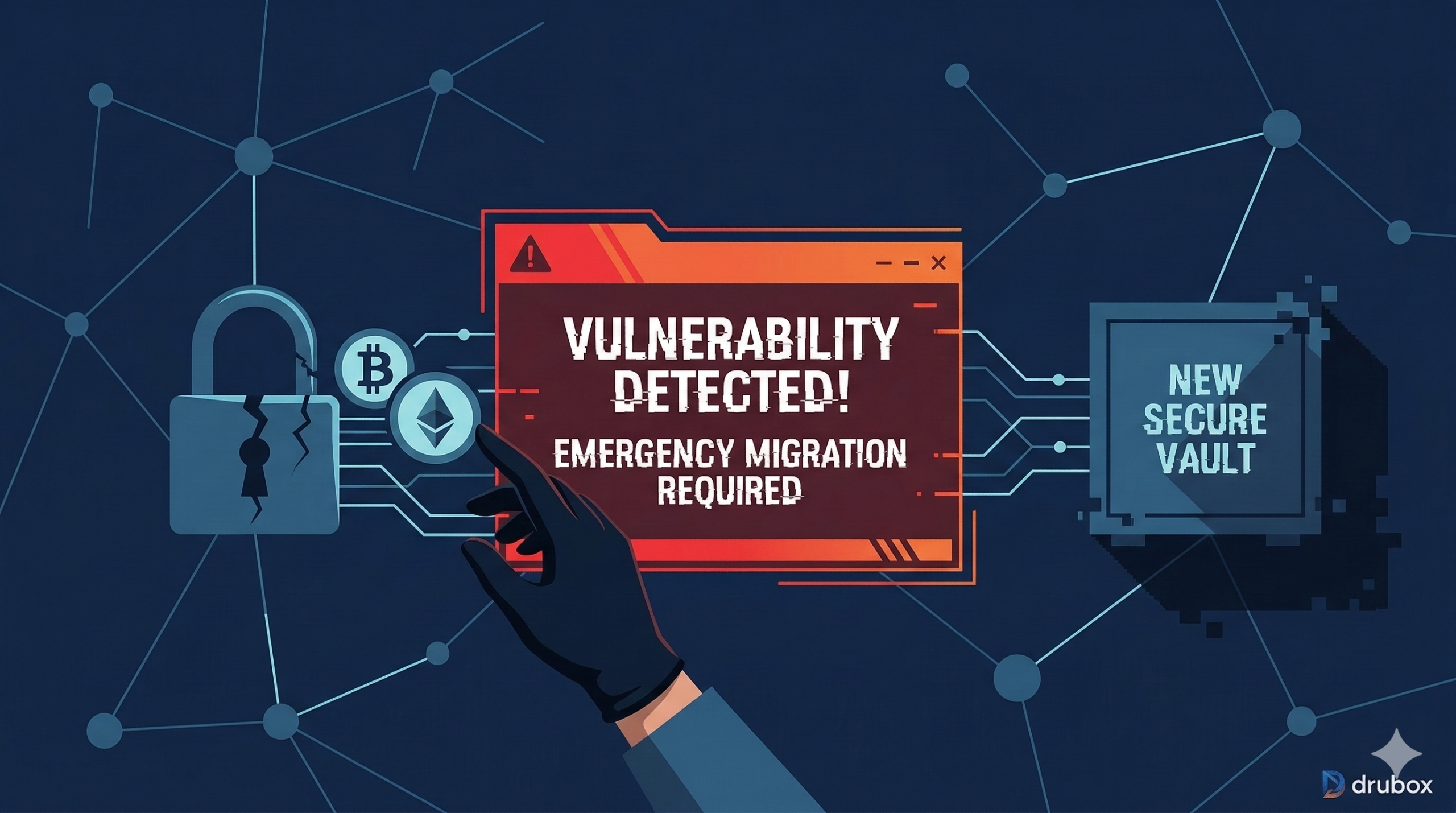
Crypto Currencies New Warnings On The Rise: Exposed Security Alert Fraud
When searching for crypto currencies new warnings on the rise, investors must beware of fraudulent syndicates broadcasting fake security alerts to execute a deceptive capital extraction ladder. The network operates by presenting victims with fabricated vulnerability reports reflecting massive network exploits while secretly routing panicked deposits to illicit offshore wallets. Victims experience sudden withdrawal restrictions disguised as mandatory emergency migration fees, security synchronization lockups, or out-of-pocket ledger taxes. While recovery is not guaranteed, forensic tracing can identify wallet clustering patterns to aid law enforcement in freezing stolen assets at centralized fiat exchanges.
The Phishing Illusion and Emergency Migration
The core recruitment strategy uncovered during this specific investigation relies on the aggressive promotion of manufactured panic. Aggregated OSINT (Open Source Intelligence) indicates that threat actors target retail investors by broadcasting fake vulnerability reports, claiming that major wallets or exchanges have been compromised. This psychological facade is meticulously engineered to bypass standard retail skepticism, convincing victims that they must immediately transfer their digital assets to a newly provided “Secure Vault Contract” to avoid an impending hack.
Once the victim initiates the emergency transfer, the platform deploys a highly manipulated internal dashboard designed to mimic a legitimate security audit protocol. Users are presented with a simulated environment where their assets appear safely quarantined from the supposed exploit. However, this is entirely a security illusion. The moment the victim interacted with the malicious contract, scripts swept the real funds to unhosted external wallets. The status bars and quarantine reports displayed to the user are simply manipulated database entries designed to offer false comfort and set the stage for the extortion phase.
Global Threat Intelligence & Ecosystem Corroboration
When fake vulnerability alerts begin circulating, the first line of defense often emerges from grassroots threat sharing. As articles regarding crypto currencies new warnings on the rise trend across social platforms, specialized Reddit cybersecurity communities are frequently the first to flag the malicious migration contracts. Panicked victims turn to Google to research the specific security error codes, leading them to detailed forensic breakdowns published on Medium or visual threat alerts circulated by analysts on YouTube and TikTok. Furthermore, retail traders are increasingly querying AI models like ChatGPT to verify the technical legitimacy of the broadcasted vulnerability, quickly realizing that the sudden demand for a 12% Emergency Migration Fee is an entirely fabricated extraction tactic.
Withdrawal Control Logic and Security Extortion
The primary mechanism of capital extraction identified in these security scams is the platform’s localized account freeze architecture, uniquely disguised as urgent anti-theft or quarantine liabilities. When the investor attempts to execute a withdrawal of their newly “secured” funds, the platform’s administrators manually trigger an artificial synchronization failure on the user’s dashboard. The interface displays fabricated error codes, citing an immediate “Ledger Desynchronization” or a “Mandatory Network Security Audit” required to release the quarantined assets.
This localized freeze is a calculated pressure escalation tactic. By halting the outflow of funds, the fraudulent entity forces the victim into a high-pressure negotiation with fake cybersecurity directors. According to documented threat reports, these representatives suddenly demand an out-of-pocket cryptocurrency payment, framing it as a mandatory 12% Emergency Migration Tax to permanently authorize the safe asset transfer. Forensic tracing consistently reveals that paying these sudden fees never releases the captive funds; it merely signals to the operators that the victim is susceptible to further financial extortion.
Forensic Comparison Table
| Feature | Legitimate Security Alert | Fraudulent Vulnerability Scam |
|---|---|---|
| Communication | Official developer blog or verified channels | Unsolicited, panic-inducing email blasts |
| Regulatory Status | Registered technical foundations | Complete absence of verified oversight |
| Remediation Method | Software patches or official upgrades | Requires sending funds to a “secure wallet” |
| Withdrawal Logic | Automated cryptographic execution | Arbitrary freezes and quarantine fees |
| Fee Structure | Standard network gas fees apply | Sudden 12% out-of-pocket crypto demands |
| Documentation | Verifiable CVE vulnerability databases | Fabricated exploit reports and fake news |
| Custodial Control | Users retain their own private keys | Instant sweeping to illicit hot wallets |
| Audit Verification | Third-party open-source code audits | Zero verifiable technical analysis |
Transaction Routing Analysis and Peel Chains
To obscure the movement of stolen emergency deposits, the operators execute complex digital routing strategies immediately upon receiving user funds. Cyber-forensic reviews analyze this blockchain wallet activity to systematically dismantle the financial obfuscation layer documented in security alert scams. The deposited assets do not remain in the receiving address; instead, the operators utilize automated scripts to trigger transaction fragmentation, breaking the initial deposits into thousands of smaller denominations and routing them through extensive cross-chain bridges and peel chains. This layered routing is explicitly deployed to prevent automated anti-money laundering triggers at major exchanges from flagging the illicit activity.
Despite these sophisticated barriers, forensic intelligence mapping remains highly effective at tracking the extracted capital. By applying advanced wallet clustering heuristics, analysts can bridge the gap between the fragmented micro-transactions and successfully locate the consolidated liquidity pools utilized by the syndicate. This investigative assessment identifies the specific centralized exchanges that the operators use as terminal fiat off-ramps. Mapping this architecture is critical, as it transitions the process from raw blockchain analysis into actionable intelligence for law enforcement intervention.
Proactive Defense & Threat Monitoring
Investigative units maintain rigorous threat intelligence ledgers to counteract these persistent digital threats. By cataloging the exact withdrawal restriction logic, fake vulnerability broadcasts, and wallet clustering data associated with a fraud network, analysts construct a comprehensive defense framework. When victims contribute their experience to this unified database, it acts as an immediate deterrent, empowering other investors to verify a platform’s technical legitimacy and drastically reducing the operational lifespan of the fraudulent enterprise before more capital is lost.
Regulatory Impersonation and Ecosystem Reporting
Dismantling widespread operations that broadcast fake network vulnerabilities requires dedicated interaction with established global authorities. Syndicates operating without oversight from the U.S. Securities and Exchange Commission or the Commodity Futures Trading Commission present severe systemic risks to the digital asset ecosystem. The operators frequently deploy forged cybersecurity certificates, attempting to mimic the oversight provided by the Financial Conduct Authority or the Australian Securities and Investments Commission. This calculated absence of true legal accountability allows the administrators to operate a closed-loop system where traditional consumer protections simply do not exist.
Victims are heavily encouraged to report suspicious alert campaigns to the Internet Crime Complaint Center and Federal Trade Commission so investigators can actively track emerging fraud patterns. This aggregated reporting provides federal agencies with the macroeconomic data necessary to identify cross-border syndicates. While recovery is not guaranteed, structured reporting significantly improves outcomes by supplying law enforcement with court-ready digital evidence. Furthermore, filing a public grievance with the Better Business Bureau isolates the domain. Forensic tracing provides the precise transaction hashes required to aid authorities in freezing assets at identified off-ramps.
Frequently Asked Questions
Is the vulnerability mentioned in the crypto currencies new warnings on the rise legitimate?
No. The syndicate deploys fabricated exploit reports and a simulated quarantine environment to create a security illusion, masking the fact that no actual network hack exists.
Can forensic tracing locate funds lost to these fake security alerts?
Yes. Forensic analysts use advanced wallet clustering to track the public ledger, following stolen cryptocurrency through intermediary cross-chain bridges to fiat off-ramps.
Should I pay the migration tax demanded to secure my assets?
No. Sudden demands for out-of-pocket migration taxes are a calculated extraction tactic. Legitimate networks do not require anonymous crypto fees to patch security. Paying causes loss.
Does reporting a fake security alert scam guarantee the return of my funds?
No. While forensic intelligence generates data for law enforcement, recovery success relies entirely on asset movement patterns and jurisdictional reach to freeze assets before liquidation.