
The Crypto Recovery Process 2026: Inside the $61 Million DOJ Seizure
When an investor realizes they have been defrauded by a sophisticated digital syndicate, the immediate aftermath is defined by panic and hopelessness. A widespread and dangerous myth persists that once cryptocurrency is sent, it vanishes into a dark, untraceable void. Overcoming this misconception is the mandatory first step in the crypto recovery process 2026.
We are here to dismantle that myth with concrete, real-world evidence. Cryptocurrency is not invisible; it is built on a permanent public ledger. When investigated by elite forensic analysts, every single transaction leaves a digital breadcrumb.
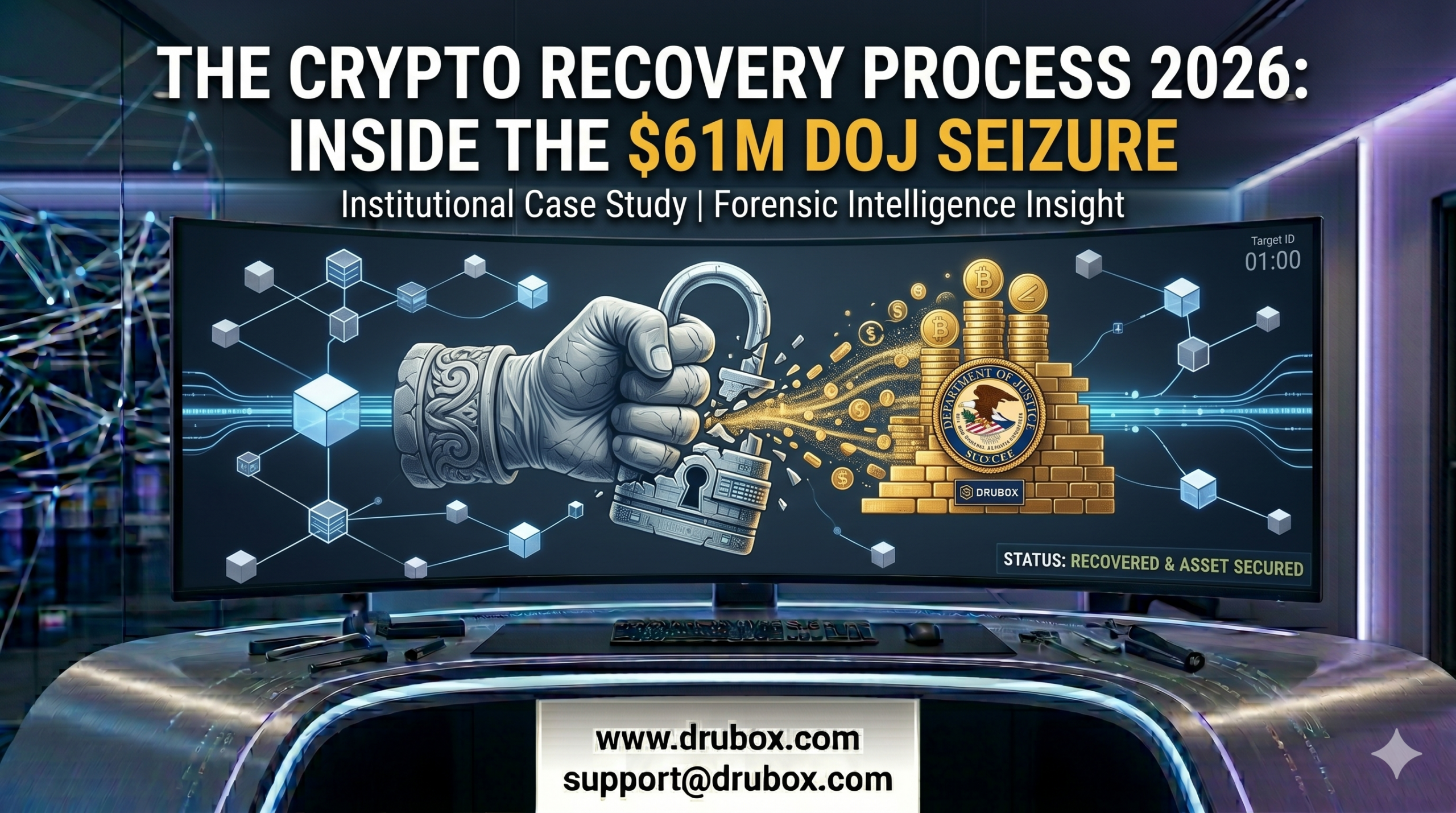
To prove that recovery is not just a theory, we are going to break down one of the most significant law enforcement victories of this year. In late February 2026, the US Department of Justice (DOJ) and Homeland Security Investigations (HSI) successfully seized $61 million in stolen cryptocurrency. Here is exactly how the crypto recovery process 2026 works in practice, and what it means for victims seeking justice.
The Myth of the Untraceable Ledger
Scam syndicates, particularly those running “pig butchering” operations, desperately want you to believe that blockchain technology is an impenetrable shield. They tell victims that the network is entirely anonymous. They rely on this psychological warfare to make you give up and walk away without contacting authorities.
The reality is the exact opposite. Blockchains like Bitcoin and Ethereum are public, immutable ledgers. This means that every single transaction, timestamp, and wallet address is permanently recorded and visible to anyone who knows how to read the data.
While criminals use complex techniques to obscure their tracks—such as rapidly bouncing funds between hundreds of temporary wallets—they cannot delete the history. Advanced forensic investigators do not just look at individual transactions; they analyze the entire structural graph of the network to map the flow of stolen capital.
A Massive Enforcement Breakthrough
The theoretical power of blockchain tracing became a devastating reality for scammers on February 24, 2026. The U.S. Attorney’s Office for the Eastern District of North Carolina announced a massive enforcement action. Federal agents seized over $61 million worth of Tether (USDT) tied directly to a massive investment fraud network.
The operation was spearheaded by Homeland Security Investigations (HSI) analysts. The syndicates had utilized fake crypto trading platforms to display fabricated profits, tricking victims into depositing massive sums. When the victims tried to withdraw, they were hit with fake “tax” demands before their accounts were locked entirely.
According to court filings, the HSI investigators did not hit a dead end when the money was stolen. Instead, they utilized advanced blockchain analytics to trace the victims’ funds through complex “wallet hops.” They tracked the assets as the criminals attempted to launder them through cross-chain transfers and decentralized swapping mechanisms.
Ultimately, the investigators followed the digital trail right into the syndicate’s “consolidation addresses.” Because stablecoin issuers like Tether have the technical ability to freeze illicit assets on their network, law enforcement successfully locked down the $61 million before the criminals could cash out.
The Five Steps of the Crypto Recovery Process 2026
The monumental $61 million DOJ seizure is a perfect case study of how modern digital asset recovery actually works. It is not magic, and it is not instantaneous. It is a rigorous, highly structured operation that bridges the gap between private cybersecurity intelligence and federal law enforcement.
If your digital assets have been compromised, you need to understand the exact roadmap to recovery. Here are the five definitive steps that organizations like Drubox and federal agencies use to successfully execute the crypto recovery process 2026.
Step 1: Rapid Incident Reporting
The HSI investigation that led to the $61 million seizure started with a single victim filing a detailed complaint. Time is the most critical variable in any recovery operation. Syndicates are engineered to move funds quickly, often initiating the laundering process within 24 to 48 hours of receiving your deposit.
Step 2: Blockchain Tracing & Graph Analysis
Once the initial transaction hashes are secured, forensic analysts deploy specialized software to map the crime. Investigators look for transaction patterns that indicate coordinated laundering activity. They analyze the timing of transfers and map exposure to identify the complex web of intermediary wallets used by the criminals.
Step 3: Off-Ramp Identification
Criminals cannot pay their real-world bills with stolen digital tokens trapped in a cold wallet. They eventually have to convert that cryptocurrency into fiat cash (like USD or Euros). To do this, they must route the funds to a centralized entity, such as a major crypto exchange or a stablecoin issuer.
Step 4: The Law Enforcement Handoff
Private intelligence desks like Drubox do not have the legal authority to freeze bank accounts. Our job is to build an irrefutable, court-ready forensic intelligence package. Once we identify the centralized exchange holding the stolen funds, that evidence is handed over to agencies like the DOJ or HSI, who then issue federal subpoenas to freeze the assets.
Step 5: Seizure and Forfeiture
Once the funds are frozen at the exchange level, the legal process of civil or criminal forfeiture begins. Authorities will legally seize the assets from the criminals’ accounts. Through coordination with the courts, those funds are then systematically returned to the verified victims of the fraud scheme.
Start your forensic assessment today
Why Time is Your Greatest Enemy
The most important takeaway from the HSI operation is that proactive intervention works. However, the window of opportunity is incredibly narrow. Once stolen funds are successfully converted into fiat currency and withdrawn from a centralized exchange into a shadow bank account, recovery becomes exponentially more difficult.
If you suspect you are currently trapped in a fraudulent trading platform, you must stop all deposits immediately. Do not pay any “withdrawal taxes” or “clearance fees,” as these are simply extortion tactics designed to drain your remaining liquidity. Your absolute priority is to secure your transaction hashes, document all communication, and initiate a professional trace before the syndicate cashes out.
The criminals behind these networks are highly organized, but they are not invincible. The blockchain is watching every move they make. By acting decisively and leveraging advanced forensic intelligence, you can turn the permanent nature of the ledger into your greatest weapon.
Frequently Asked Questions (FAQ)
Can stolen cryptocurrency actually be recovered?
Yes. While difficult, recovery is entirely possible through advanced blockchain tracing. As proven by the DOJ’s recent $61 million seizure, investigators can track stolen assets through laundering networks and freeze them when they hit centralized exchanges.
How do investigators track crypto if it is anonymous?
Cryptocurrency is pseudonymous, not entirely anonymous. Every transaction is permanently recorded on a public ledger. Forensic analysts use specialized software to analyze these transaction graphs, following the flow of funds through complex “wallet hops” to identify the final cash-out destinations.
What is the most critical step if I have been scammed?
Rapid reporting is your absolute priority. Scammers attempt to launder and cash out stolen funds as quickly as possible. Securing your transaction hashes and initiating the crypto recovery process 2026 immediately greatly increases the chances of intercepting the funds.
Do private investigators freeze the stolen funds?
No. Private forensic desks like Drubox build the verifiable intelligence reports showing exactly where the money went. That court-ready evidence is then handed over to law enforcement agencies, who use their legal authority to issue subpoenas and execute the actual asset freezes.
Initiate a recovery intelligence review