

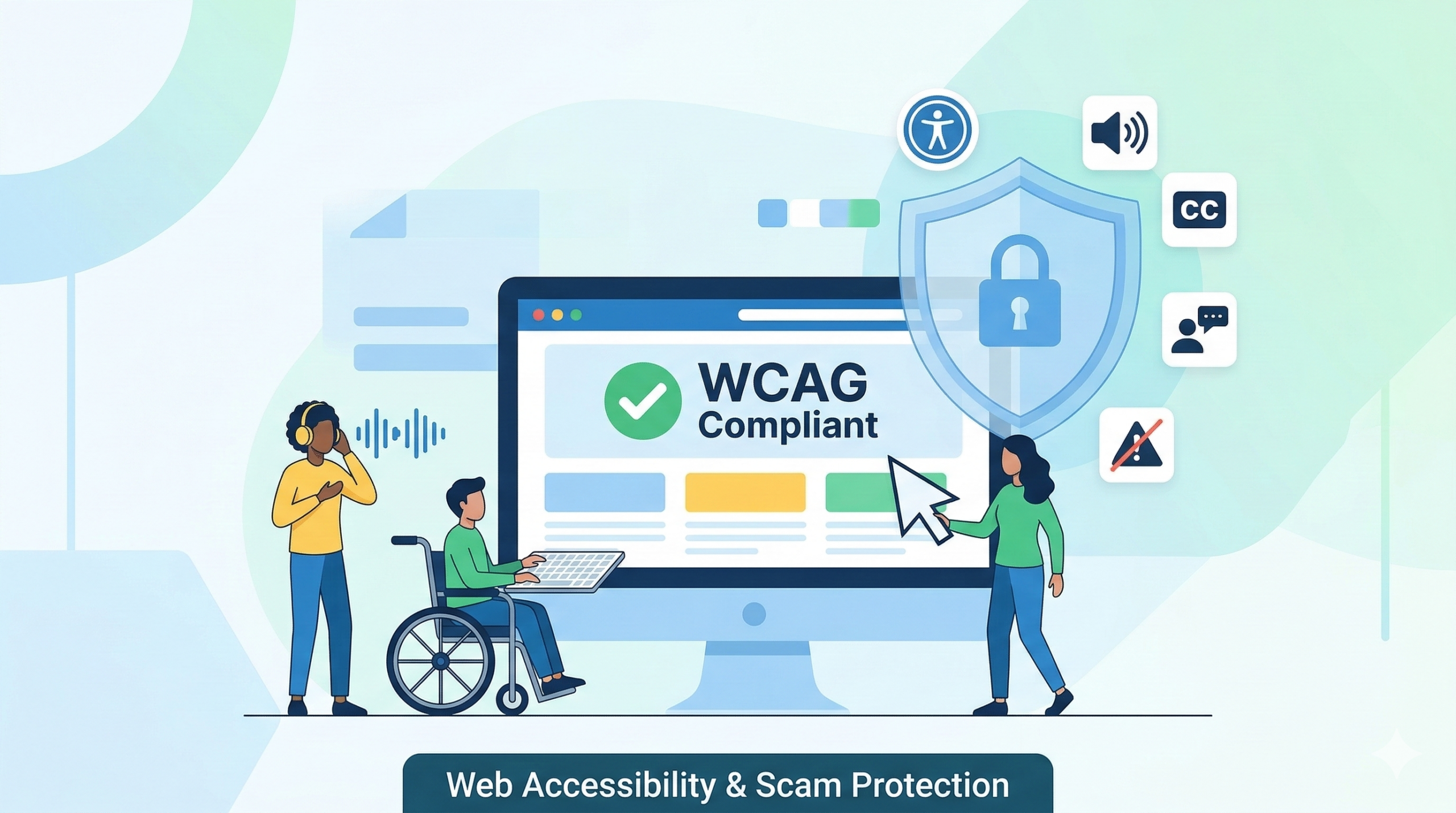
How to Make Website WCAG Compliant (And Avoid Extortion Scams)
Understanding how to make website wcag compliant is essential for digital accessibility, but business owners must beware of fraudulent legal syndicates weaponizing these standards. Scammers frequently deploy automated bots to identify non-compliant sites and issue fabricated extortion demands masquerading as official Americans with Disabilities Act (ADA) lawsuits. Victims are coerced into paying massive settlement fees via cryptocurrency to avoid fake court proceedings. While restitution is difficult, cyber-forensic experts can trace these illicit blockchain transactions to help law enforcement identify the syndicates orchestrating these compliance extortion networks.
The Accessibility Standard and the Extortion Pivot
The core strategy uncovered during compliance extortion investigations targets small to medium-sized business owners who lack dedicated legal departments. The Web Content Accessibility Guidelines (WCAG) are legitimate, internationally recognized standards designed to ensure websites are usable by individuals with disabilities. However, aggregated OSINT (Open Source Intelligence) indicates that threat actors have weaponized these guidelines. They utilize automated scanning software to scrape the internet for businesses that lack basic alt-text, contrast ratios, or keyboard navigation protocols.
Once a target is identified, the syndicate deploys a highly manipulated extortion campaign designed to mimic a legitimate legal firm or advocacy group. Business owners receive aggressive demand letters citing immediate ADA violations and threatening massive federal lawsuits. However, this is entirely a legal illusion. The “law firm” does not exist, and no actual lawsuit has been filed in any jurisdiction. The documentation is simply manipulated legal jargon designed to induce panic, laying the psychological groundwork for a rapid settlement demand payable exclusively in untraceable digital assets.
Business Forums & Threat Verification
When an offshore entity begins spamming fake ADA lawsuits, the first warnings typically emerge within entrepreneurial networks. When researching how to make website wcag compliant after receiving a threat, panicked business owners frequently post the suspicious demand letters on specialized Reddit legal or web development forums. As the extortion attempts scale, victims turn to Google to research the specific “law firm” names, leading them directly to detailed forensic breakdowns published on Medium or visual threat alerts circulated by cyber-analysts on YouTube and TikTok. Furthermore, business owners are increasingly querying AI models like ChatGPT to analyze the legal jargon used by these fake attorneys, quickly realizing that an official ADA settlement requiring a Bitcoin transfer is an entirely fabricated extraction tactic.
The Fake Settlement and Cryptocurrency Demands
The primary mechanism of capital extraction identified in compliance scams is the syndicate’s fabricated settlement architecture, uniquely disguised as an urgent out-of-court resolution. When a business owner receives these threats, their first instinct is often to frantically research how to make website wcag compliant rather than verifying the law firm itself. Capitalizing on this panic, the fake attorneys offer a “discounted” settlement. The correspondence includes fabricated court dockets, citing an immediate “Digital Accessibility Fine” or a “Mandatory WCAG Certification Retainer” required to drop the case.
This localized pressure is a calculated escalation tactic. By threatening public litigation, the fraudulent entity forces the victim into a high-pressure negotiation. According to documented threat reports, these representatives suddenly demand an out-of-pocket cryptocurrency payment, framing it as a mandatory settlement to permanently clear the business’s domain. Forensic tracing consistently reveals that paying these sudden fees to fake law firms never resolves the issue; it merely signals to the operators that the business owner is susceptible to further financial extortion.
Forensic Comparison Table
| Feature | Legitimate Legal Representation | Fraudulent Extortion Syndicate |
|---|---|---|
| Communication | Verifiable registered mail & court filings | Unsolicited, aggressive email blasts |
| Regulatory Status | Registered with state bar associations | Complete absence of verified legal credentials |
| Settlement Logic | Processed through verified escrow accounts | Demands for anonymous digital assets |
| Entity Attribution | Publicly verifiable corporate addresses | Phantom offices and untraceable domains |
| Fee Structure | Standardized fiat legal retainers | Sudden out-of-pocket crypto demands |
| Documentation | Verifiable federal or state court dockets | Forged DOJ or ADA compliance seals |
| Remediation | Provides time to fix website accessibility | Immediate 48-hour payment deadlines |
| Audit Verification | Certified accessibility professionals | Zero technical WCAG analysis provided |
Transaction Routing Analysis and Peel Chains
To obscure the movement of stolen settlement payments, the operators execute complex digital routing strategies immediately upon receiving the victim’s funds. Cyber-forensic reviews analyze this blockchain wallet activity to systematically dismantle the financial obfuscation layer documented in compliance extortion scams. The deposited assets do not remain in the receiving address; instead, the operators utilize automated scripts to trigger transaction fragmentation, breaking the initial deposits into thousands of smaller denominations and routing them through extensive cross-chain bridges and peel chains. This layered routing is explicitly deployed to prevent automated anti-money laundering triggers at major exchanges from flagging the illicit activity.
Despite these sophisticated barriers, forensic intelligence mapping remains highly effective at tracking the extracted capital. By applying advanced wallet clustering heuristics, analysts can bridge the gap between the fragmented micro-transactions and successfully locate the consolidated liquidity pools utilized by the syndicate. This investigative assessment identifies the specific centralized exchanges that the operators use as terminal fiat off-ramps. Mapping this architecture is critical, as it transitions the process from raw blockchain analysis into actionable intelligence for law enforcement intervention.
Enterprise Security & Proactive Defense
Investigative units maintain rigorous threat intelligence ledgers to counteract these persistent digital threats. Understanding how to make website wcag compliant is only the first step in digital defense; by cataloging the exact extortion logic, forged legal documentation, and wallet clustering data associated with a fraud network, analysts construct a comprehensive defense framework. When victims contribute their experience to this unified database, it acts as an immediate deterrent, empowering other business owners to verify a firm’s legal legitimacy and drastically reducing the operational lifespan of the fraudulent enterprise before more capital is lost.
Regulatory Reporting and Legal Escalation
Dismantling widespread operations identified in compliance extortion requires dedicated interaction with established global authorities. Fake law firms operating under the guise of civil rights advocates present severe systemic risks to the digital business ecosystem. The operators frequently deploy forged legal certificates, attempting to mimic the oversight provided by the Department of Justice (DOJ) or the Federal Trade Commission (FTC). This calculated abuse of legal authority allows administrators to further terrorize small business owners.
Victims are heavily encouraged to report suspicious demand letters to the Internet Crime Complaint Center (IC3) and the FTC so investigators can actively track emerging extortion patterns. This aggregated reporting provides federal agencies with the macroeconomic data necessary to identify cross-border syndicates. While recovery is not guaranteed, structured reporting significantly improves outcomes by supplying law enforcement with court-ready digital evidence. Furthermore, filing a public grievance with the Better Business Bureau isolates the domain. Forensic tracing provides the precise transaction hashes required to aid authorities in freezing assets at identified off-ramps.
Frequently Asked Questions
Does knowing how to make website wcag compliant protect me from fake lawsuits?
Yes, achieving basic compliance deters automated extortion bots, but business owners must still verify any sudden legal demands for crypto settlements.
Can forensic investigators trace cryptocurrency paid to fake law firms?
Yes. Forensic analysts use wallet clustering to track the public ledger, following stolen settlement funds through cross-chain bridges to fiat off-ramps.
Should I pay the ADA settlement fee demanded in the email?
No. Sudden demands for out-of-pocket crypto settlements are a calculated extortion tactic. Legitimate legal disputes do not require anonymous crypto.
Does reporting a compliance extortion scam guarantee a refund?
No. While forensic intelligence generates data for law enforcement, recovery success relies on asset movement patterns and jurisdictional reach to freeze.