
What To Do If You Were Scammed: Critical Recovery ( 2026 Guide )
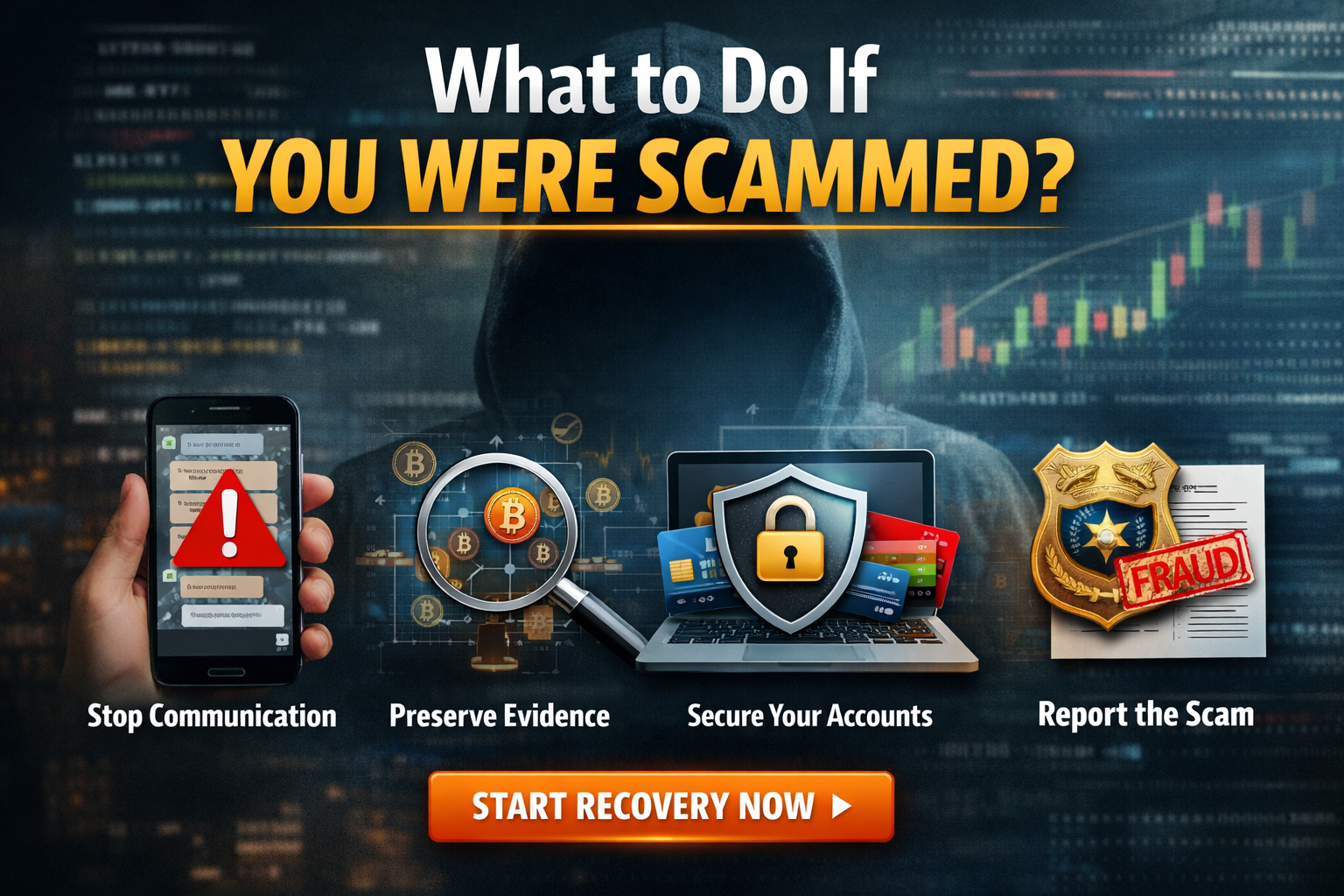
Knowing what to do if you were scammed requires immediately ceasing all communication with the fraudulent platform and securing your remaining digital assets. Victims must document all transaction hashes, wallet addresses, and communication logs before the threat actors can delete the digital evidence. Securing this raw data allows forensic investigators to map the illicit capital flow through decentralized peel chains to centralized fiat off-ramps. While recovery is not guaranteed, structured cyber-intelligence empowers law enforcement to issue freeze directives at compliant exchanges before the funds are liquidated.
Immediate Threat Mitigation and Asset Security
The first and most critical phase of understanding what to do if you were scammed involves immediate threat mitigation. When victims realize they are trapped in a capital extraction ladder—often triggered by a sudden demand for an out-of-pocket tax or an unexpected account freeze—panic frequently leads to further financial mistakes. The immediate directive is to stop all outgoing transfers. You must absolutely refuse to pay any fabricated capital gains taxes, VIP upgrade fees, or margin call settlements demanded by the platform administrators, as these are simply secondary extortion tactics designed to drain your remaining liquid capital.
Simultaneously, you must secure your external digital infrastructure. If you connected a web3 wallet to a fraudulent decentralized application, immediately use a verified token revocation tool to sever the malicious smart contract’s access to your assets. If you provided sensitive identifying documents to an unregulated offshore broker, you must initiate a credit freeze and secure your primary email and banking accounts with hardware-based two-factor authentication to prevent subsequent identity theft vectors.
Public Signal & Community Corroboration
Victims and analysts share intelligence on platforms such as Google, Reddit, YouTube, TikTok, Medium, and ChatGPT. Community posts provide early warnings, corroborate forensic findings, and create negative signals that appear in search results when future victims research suspicious domains. Sharing the exact malicious wallet addresses and fake regulatory claims you encountered is a critical step in what to do if you were scammed, as this shared intelligence actively destroys the syndicate’s prestige illusion and prevents further ecosystem damage.
Evidence Preservation and Forensic Documentation
Following immediate mitigation, the next step in what to do if you were scammed is the meticulous preservation of digital evidence. Threat actors frequently operate on short domain lifespans. Once they realize a victim is no longer willing to pay the secondary extortion taxes, they will routinely delete the victim’s account, wipe the simulated trading dashboard, and take the fraudulent website offline to cover their digital tracks.
To combat this, victims must immediately take high-resolution screenshots of the entire platform interface, focusing specifically on their account balances, alleged trading histories, and any fabricated error codes blocking their withdrawals. Most importantly, you must locate and securely store every single blockchain transaction hash (TXID) related to your outbound deposits. These cryptographic receipts are mathematically immutable and serve as the absolute foundation for the subsequent cyber-forensic investigation.
Forensic Comparison Table
| Feature | Panic-Driven Response | Forensic Incident Response |
|---|---|---|
| Communication | Arguing with fake customer support | Ceasing all contact with threat actors |
| Secondary Fees | Paying fake taxes to release funds | Refusing all out-of-pocket demands |
| Digital Evidence | Relying on the live dashboard access | Archiving TXIDs and chat screenshots |
| Wallet Security | Leaving compromised permissions active | Executing immediate token revocation |
| Ecosystem Action | Internalizing the financial loss | Reporting data to the Scam Registry |
| Investigation Focus | Demanding refunds from the fake broker | Tracking assets on the public blockchain |
| Legal Strategy | Sending localized legal threats | Supplying intelligence for freeze directives |
| Recovery Expectation | Believing the platform’s false promises | Relying on off-ramp exchange compliance |
Advanced Wallet Clustering and Off-Ramp Detection
Once the evidence is secured, investigators execute advanced blockchain tracing to pierce the syndicate’s operational opacity. Fraudulent networks rarely leave stolen deposits in the initial receiving address. Instead, they utilize automated scripts to trigger transaction fragmentation, pushing the digital assets through an extensive series of peel chains and cross-chain bridges. This layered routing is deployed to prevent automated anti-money laundering triggers at major exchanges from flagging the illicit activity.
However, forensic intelligence mapping is highly effective at neutralizing these obfuscation tactics. By applying advanced wallet clustering heuristics to the preserved TXIDs, analysts can mathematically reassemble the fragmented transaction history. This investigative assessment identifies the specific centralized exchanges that the operators use as terminal fiat off-ramps. Mapping this architecture is the definitive turning point in what to do if you were scammed, as it transitions the process from a passive loss into an actionable legal target.
Forensic Monitoring & Community Protection
Investigative units maintain rigorous threat intelligence ledgers to counteract persistent digital threats. By cataloging the exact withdrawal restriction logic, forged compliance documents, and wallet clustering data associated with a fraud network, analysts construct a comprehensive defense framework. When victims contribute their preserved evidence to this unified database, it acts as an immediate deterrent, empowering other investors to verify a platform’s technical legitimacy and drastically reducing the operational lifespan of the fraudulent enterprise.
Regulatory Escalation and Ecosystem Reporting
The final phase of recovery strategy involves strict interaction with established global authorities. Unregulated platforms present severe systemic risks that must be legally documented. The aggregated forensic intelligence must be escalated to the Internet Crime Complaint Center and Federal Trade Commission. This reporting provides federal agencies with the macroeconomic data necessary to identify cross-border syndicates operating without oversight from the U.S. Securities and Exchange Commission or the Commodity Futures Trading Commission.
While restitution is never guaranteed, structured reporting significantly improves outcomes by supplying law enforcement with court-ready digital evidence. Furthermore, filing a public grievance with the Better Business Bureau isolates the domain. The precise transaction hashes provided by the cyber-forensic review allow authorities to bypass the jurisdictional hurdles associated with the Financial Conduct Authority or the Australian Securities and Investments Commission. This actionable intelligence empowers law enforcement to issue immediate freeze directives to compliant virtual asset service providers, locking the threat actor’s accounts before the fiat conversion process concludes.
Frequently Asked Questions
Is knowing what to do if you were scammed enough to guarantee a full refund?
No. While executing the correct incident response prevents further losses, recovery depends entirely on forensic tracking, asset movement patterns, and international law enforcement’s ability to freeze the capital.
Can forensic investigators trace funds across different blockchain networks?
Yes. Despite perpetrators utilizing cross-chain bridges and peel chains, advanced wallet clustering heuristics allow forensic analysts to follow the stolen digital assets across multiple ledgers to their final fiat off-ramps.
Should I pay the recovery tax demanded by the platform administrators?
No. Demands for out-of-pocket capital gains taxes or audit fees are calculated extraction tactics. Paying these fabricated exit barriers strictly results in further, compounded financial losses.
Does reporting the theft to the government freeze the stolen digital assets?
No. Reporting generates data for federal databases, but authorities require the specialized blockchain mapping provided by a forensic review to identify the specific centralized exchange accounts necessary for a freeze directive.