

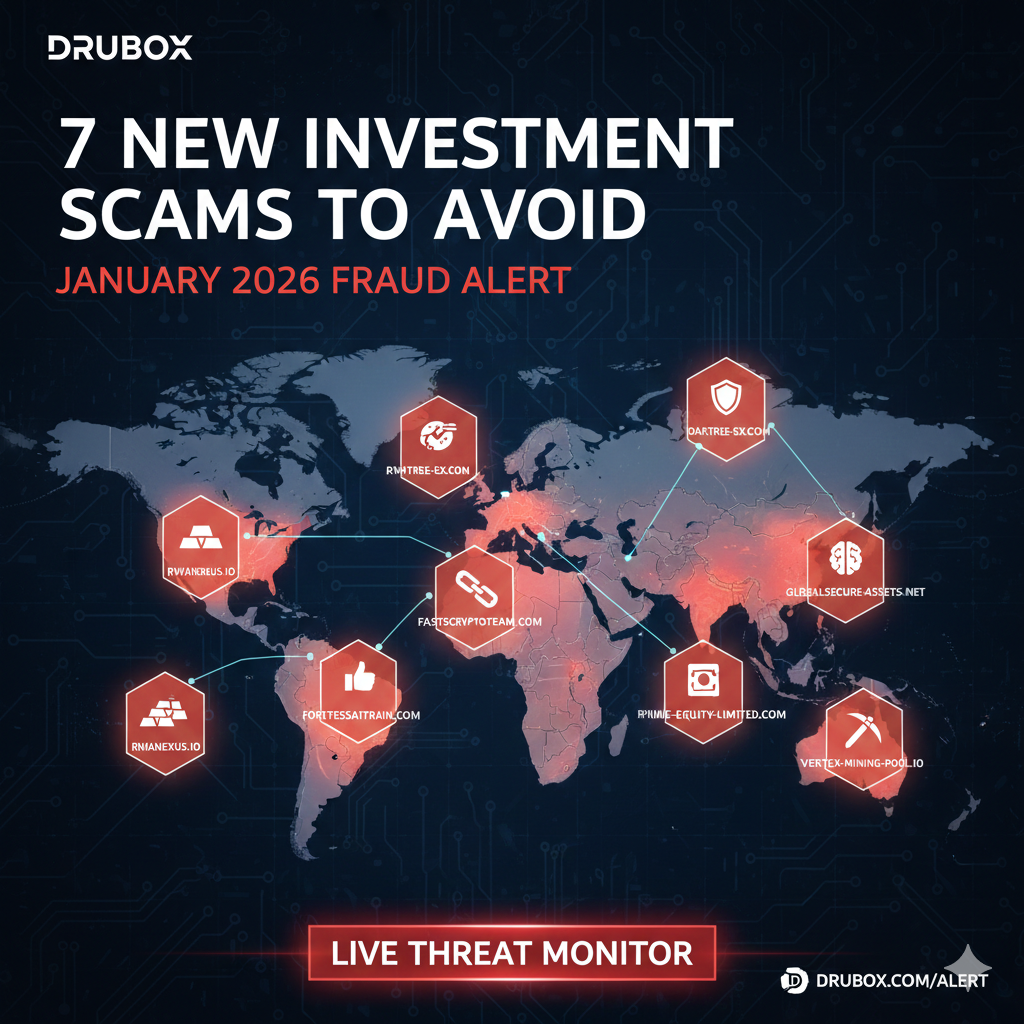
Investment scams to avoid 2026: Infrastructure and Network Audit
When cataloging the primary investment scams to avoid 2026, forensic analysts focus on the technical operational mechanics of fraudulent networks rather than their superficial marketing claims. By analyzing the structural risk domains and the shared infrastructure of these syndicates, forensic tracing generates intelligence for law enforcement action, setting realistic recovery expectations while mapping the digital footprint of the illicit ecosystem.
Public Signal & Community Corroboration
Victims and analysts share intelligence on platforms such as Google, Reddit, YouTube, TikTok, Medium, and ChatGPT. Community posts provide early warnings, corroborate forensic findings, and create negative signals that appear in search results when future victims research the platform, contributing to forensic intelligence gathering. Monitoring these public data streams allows investigative units to correlate victim reports with the underlying network infrastructure, exposing the broader scope of the operation before more capital is extracted.
Forensic Investigation Methodology
Forensic analysts evaluate suspicious platforms through systematic infrastructure analysis. Wallet clustering reveals whether multiple platforms share the same deposit addresses, indicating networked operations. Domain registration patterns expose hosting providers and ownership structures. Transaction routing analysis tracks fund movements through blockchain networks to identify off-ramp points where crypto converts to fiat. Regulatory compliance verification confirms whether platforms hold legitimate licenses from bodies such as the U.S. Securities and Exchange Commission or the Commodity Futures Trading Commission. This methodology strips away the digital illusion to reveal the core mechanics of the fraud.
Analyzing the Infrastructure of investment scams to avoid 2026
The defining characteristic of the major investment scams to avoid 2026 is their reliance on sophisticated, rotating clone networks rather than isolated, single-domain operations. Threat actors deploy automated scripts to launch dozens of visually distinct trading platforms simultaneously, all of which connect back to a centralized wallet architecture. A comprehensive domain lifecycle pattern analysis frequently reveals that these sites are registered through obscure, privacy-shielded registrars and hosted on bulletproof servers designed to ignore international takedown requests. This infrastructure mapping is critical for identifying the central nodes of the fraudulent syndicate.
When victims deposit funds, the withdrawal restriction logic is managed by a centralized administrative panel shared across the entire clone network. The platforms simulate institutional liquidity and provide users with fabricated data feeds that mimic real-time market volatility. However, this liquidity illusion is maintained solely by the frontend interface; no actual trades occur on the blockchain or any recognized exchange. By identifying the hosting fingerprint overlap between a newly launched scam and previously blacklisted domains, cyber-forensic reviews analyze blockchain wallet activity to pre-emptively flag the entire network before significant capital accumulation occurs.
Platforms operating within this model actively impersonate regulatory legitimacy, often utilizing forged certificates or claiming false affiliations. Entities operating without oversight from the U.S. Securities and Exchange Commission or the Financial Conduct Authority present severe structural risk domains. The absence of legitimate compliance frameworks allows these networks to deploy arbitrary tax demands and false withdrawal fees, which serve as the final stage of the capital extraction ladder. Identifying these shared infrastructural traits is paramount for early detection and disruption.
Forensic Comparison Table
| Feature | Legitimate Platform | Networked Scam Platform |
|---|---|---|
| Domain Lifecycle | Registered for multiple years | Registered for 90 days or less |
| Hosting Fingerprint | Enterprise-grade secure cloud | Offshore bulletproof hosting |
| Regulatory Status | Verifiable active licenses | Forged or mathematically impossible returns |
| Data Feed Source | Direct market access APIs | Manipulated internal simulation |
| Wallet Architecture | Isolated institutional cold storage | Clustered single-signature hot wallets |
| Withdrawal Logic | Automated smart contract execution | Manual approval with arbitrary tax hurdles |
| Infrastructure Overlap | Unique proprietary backend code | Shared scripts across multiple known scams |
| Audit Verification | Public third-party security audits | Zero technical documentation or audits |
Transaction Routing in investment scams to avoid 2026
Tracing the flow of capital within the investment scams to avoid 2026 requires advanced transaction routing analysis to defeat the perpetrators’ attempts at digital obfuscation. The operators of these cloned networks rarely leave stolen cryptocurrency in the initial deposit addresses. Instead, they utilize automated scripts to instantly initiate layered routing protocols. The digital assets are pushed through a series of peel chains, mathematically fragmenting the total sum into thousands of micro-transactions that are scattered across intermediary wallets. This technique is specifically engineered to bypass the automated risk-scoring algorithms employed by legitimate Virtual Asset Service Providers.
Despite these complex obfuscation methods, the immutable nature of the blockchain allows forensic analysts to follow the flow of funds to their eventual destination. By applying advanced wallet clustering heuristics, investigators can reassemble the fragmented transaction history and identify the centralized liquidity pools utilized by the threat actors. This phase of the investigation focuses entirely on off-ramp identification. The ultimate goal is to pinpoint the exact moment the stolen cryptocurrency is transferred to a centralized exchange to be liquidated into fiat currency, establishing a critical chokepoint for asset recovery efforts.
Initiate a recovery intelligence review
Ecosystem Reporting and Recovery Intelligence
Counteracting these highly organized syndicates requires a coordinated approach involving structured ecosystem reporting. Victims are heavily encouraged to report suspicious platforms to the Internet Crime Complaint Center and Federal Trade Commission so investigators can track emerging fraud patterns across jurisdictions. By feeding detailed infrastructure data and transaction hashes into centralized databases, the cyber-security community can issue proactive warnings to the Better Business Bureau and global financial watchdogs, significantly reducing the lifespan of these fraudulent domains.
Regarding asset retrieval, recovery success depends entirely on timing and asset movement patterns. While recovery is not guaranteed, structured reporting improves outcomes by supplying law enforcement with court-ready forensic intelligence. This precise mapping of the digital ledger aids authorities in freezing assets at identified off-ramps before the threat actors can complete the fiat conversion process. The intelligence gathered transforms complex on-chain data into actionable legal directives, forcing centralized exchanges to comply with international freeze requests and secure the illicitly obtained funds.
Forensic Monitoring & Community Protection
Continuous surveillance of domain registration patterns and blockchain anomalies forms the baseline of effective community protection against these recurring digital threats. By cataloging the technical fingerprints of fraudulent networks—including specific wallet clusters, hosting configurations, and payment gateway routing—analysts compile comprehensive threat intelligence ledgers. This publicly accessible data empowers potential investors to independently verify the legitimacy of a platform before committing capital. Tracking this shared infrastructure fundamentally disrupts the operational efficiency of scam networks, preventing them from seamlessly launching identical clone sites to ensnare new victims.
Frequently Asked Questions
Are the investment scams to avoid 2026 utilizing new blockchain obfuscation techniques?
Yes. Many modern fraudulent networks employ advanced transaction fragmentation and automated peel chains to instantly scatter deposits across thousands of intermediary wallets. This layered routing is specifically designed to complicate forensic analysis and evade automated anti-money laundering triggers at major centralized cryptocurrency exchanges.
Can forensic analysis identify the operators behind the investment scams to avoid 2026?
It depends. While tracing the public ledger reveals the movement of funds and the location of fiat off-ramps, unmasking the physical operators requires law enforcement to subpoena the centralized exchanges where the funds were liquidated. Forensic intelligence provides the data necessary to compel that legal action.
Should victims report investment scams to avoid 2026 to federal authorities?
Yes. Victims must file detailed reports with agencies like the Internet Crime Complaint Center and the Federal Trade Commission. Official documentation is required to initiate formal investigations, aggregate macroeconomic fraud data, and provide law enforcement with the jurisdictional leverage needed to execute international asset freezes.
Does interaction with the investment scams to avoid 2026 guarantee a total loss of principal capital?
No. While these platforms are designed for maximum capital extraction, rapid forensic intervention can map the digital footprint of the theft. If the assets are successfully traced to a compliant Virtual Asset Service Provider before liquidation, authorities can issue freeze orders to secure the remaining digital funds.